

Stock Market Commentary
In a flashback to August’s opening trading salvo, September trading started with a sharp pullback. The decline fit the standard theme of “professional” traders and investors returning from summer vacations to take profits from a market levitating on low volume vapors. However, sensing redux price action, the market’s persistent buyers jumped right into the dip and created rallies off intraday lows. Buyers continued buying until they “exhausted” themselves celebrating a weak and concerning employment report for August. The initial gap higher in the wake of the report came from giddy anticipation of the necessary, and perhaps now substantial, rate cuts required to respond to the slowing employment picture. A fade to close the week has the look of tentative trading ever so slightly acknowledging economic risks to the stock market. Small caps held on to the positive prospects for rate cuts.
The tug of war between relief over rate cuts and concern about a slowing economy will keep playing out as fresh data arrive once the rate-cut cycle begins. Revisions in the jobs report revealed the economy actually lost jobs in June. The unemployment rate ticked up from 4.2% to 4.3%. Accordingly, slowdown anxieties are ramping (just do not look to the stock market for evidence or to Google searchers). The last such episode was the summer of 2024 when the Sahm Rule triggered and signaled an impending or existing recession. If a recession happens soon without a fresh Sahm Rule trigger, the resulting gap in time would be the longest duration yet between the Sahm Rule trigger and the recession. Given the steady decline in the Sahm Rule since it triggered last year, the odds lean toward no recession…and the Sahm Rule’s first false negative.
The Stock Market Indices
S&P 500 (SPY)
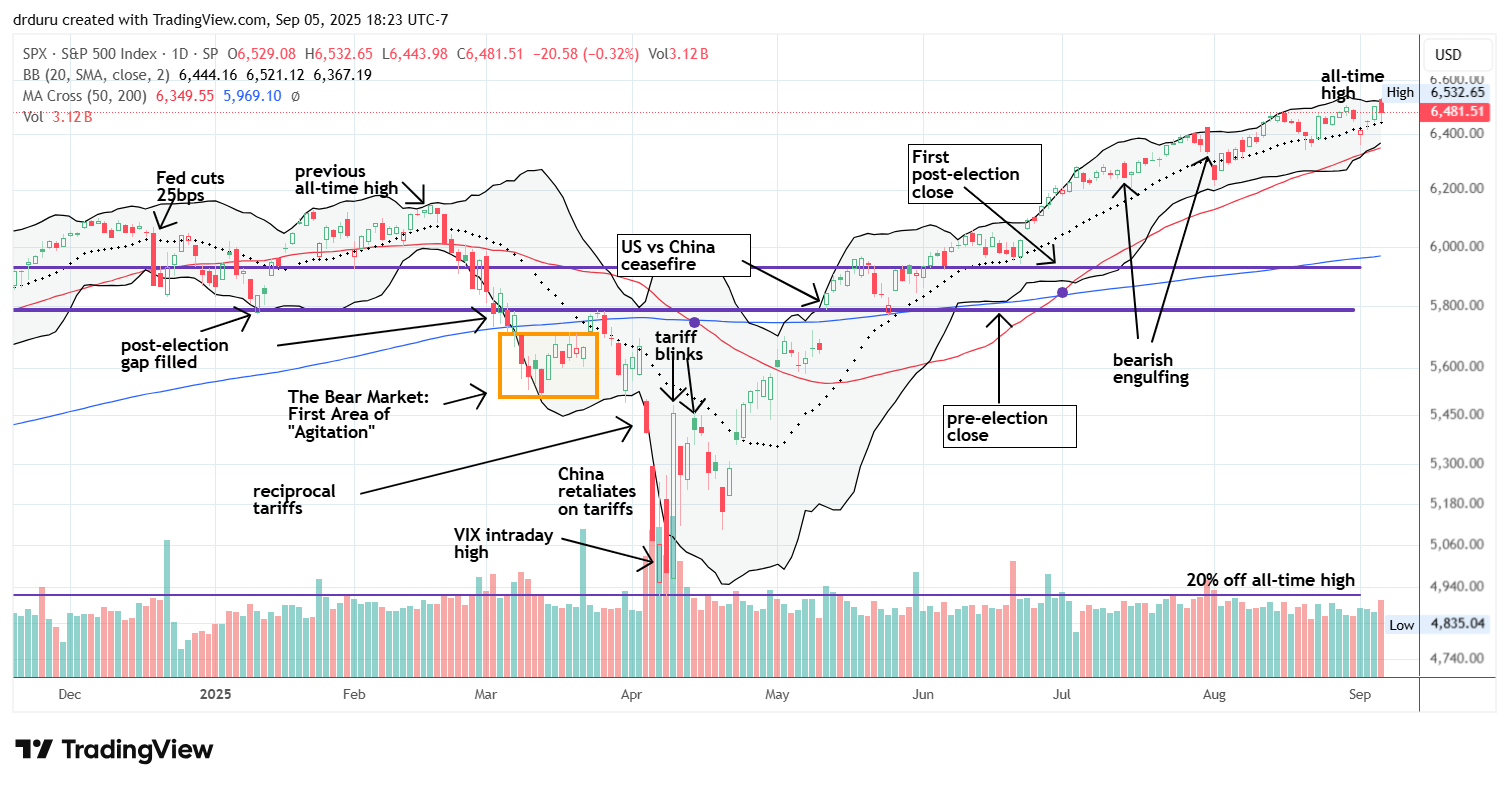
The S&P 500 just missed a new all-time high. The accompanying fade turned an early celebration into a 0.3% loss on the day. However, the character of the uptrend has not changed. The 20-day moving average (DMA) (the dotted line in the chart below) remains the guide, and buyers learned from the sharp pullback that started August: they stepped in as the index approached 50DMA support (the red line) and barely looked back from there.
NASDAQ (COMPQX)
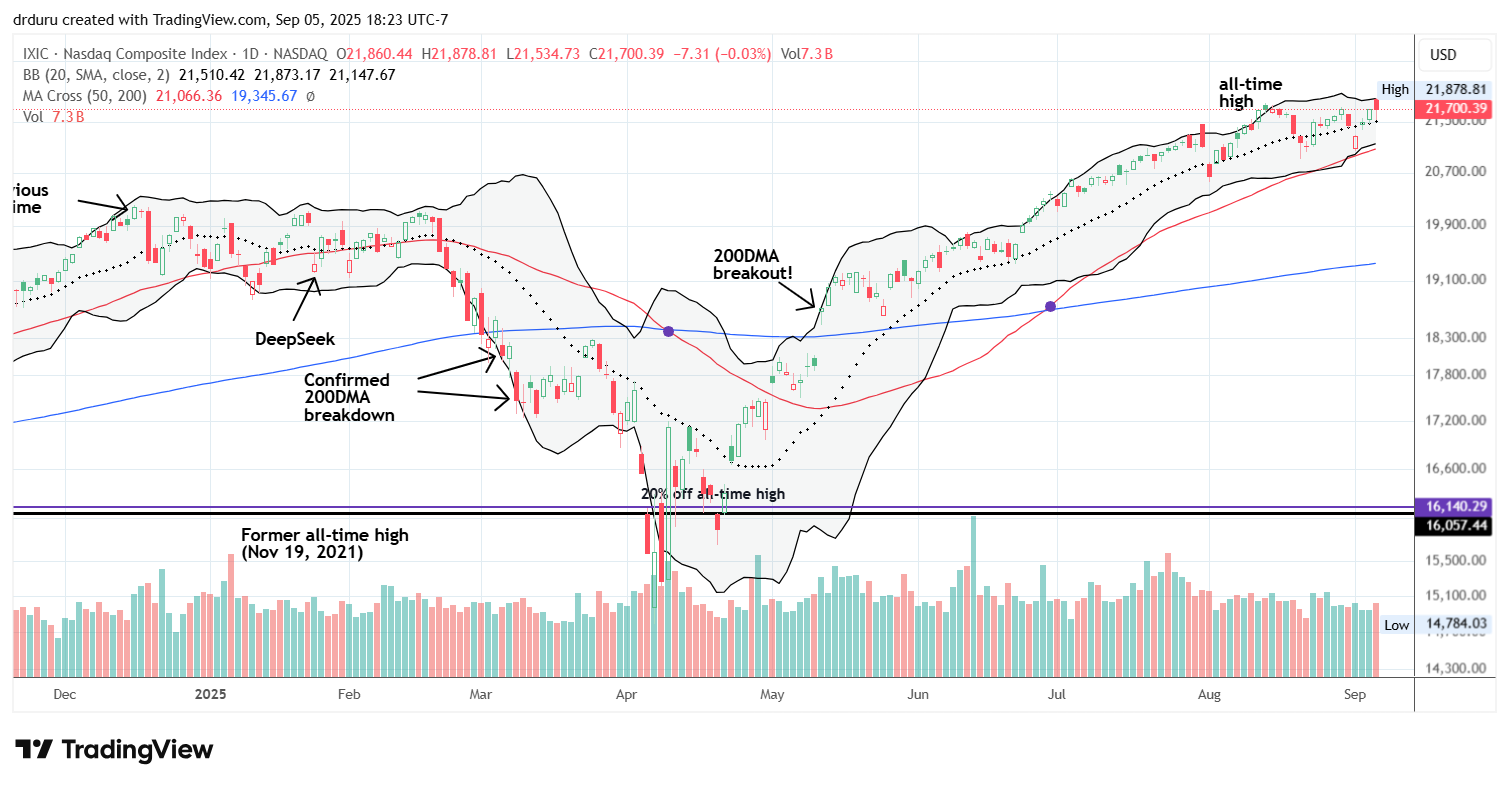
The NASDAQ looked set to close at an all-time high before faders dragged the tech-laden index back to flat. The price action mirrored the S&P 500 with the same 20DMA leadership and the same August “redux” feel where early weakness drew in buyers at 50DMA support. Suspecting a redux, I bought a QQQ calendar call spread. The subsequent rally was so strong that I barely eked out a gain as QQQ flew right by my $570 strike.
iShares Russell 2000 ETF (IWM)
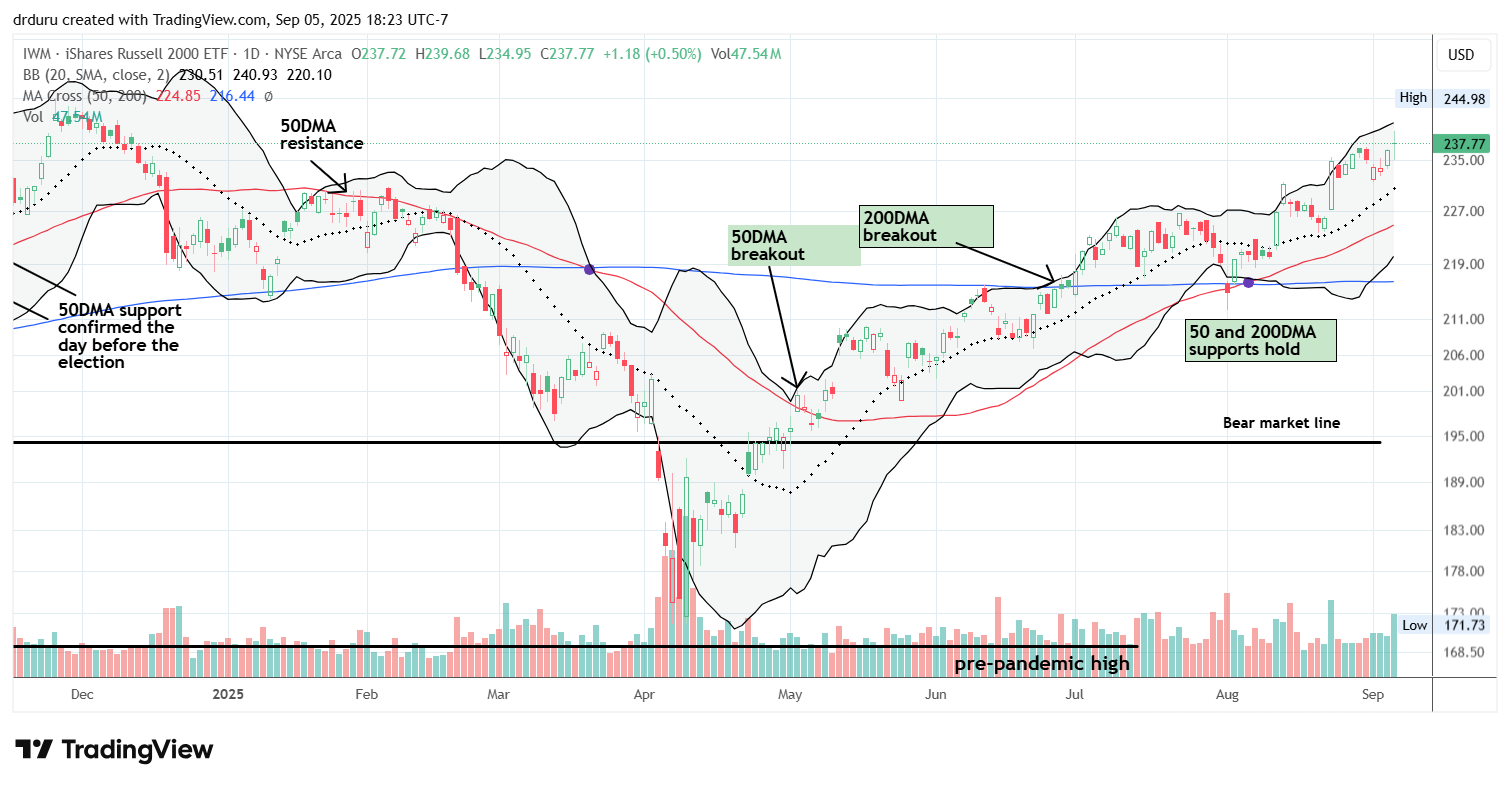
Small caps were the champs of the week. IWM closed up 0.5%, printing a new high back to December and firming its uptrend after wavering in July. In a rate-cutting cycle, the resulting financing relief should favor smaller, more speculative names, so I expect small caps to keep outperforming in a more accommodating monetary environment. I hold a substantial core IWM position I have accumulated since last year, and I carried call options into next week as I continue to trade around my core position.
The Short-Term Trading Call When Rally Reignites
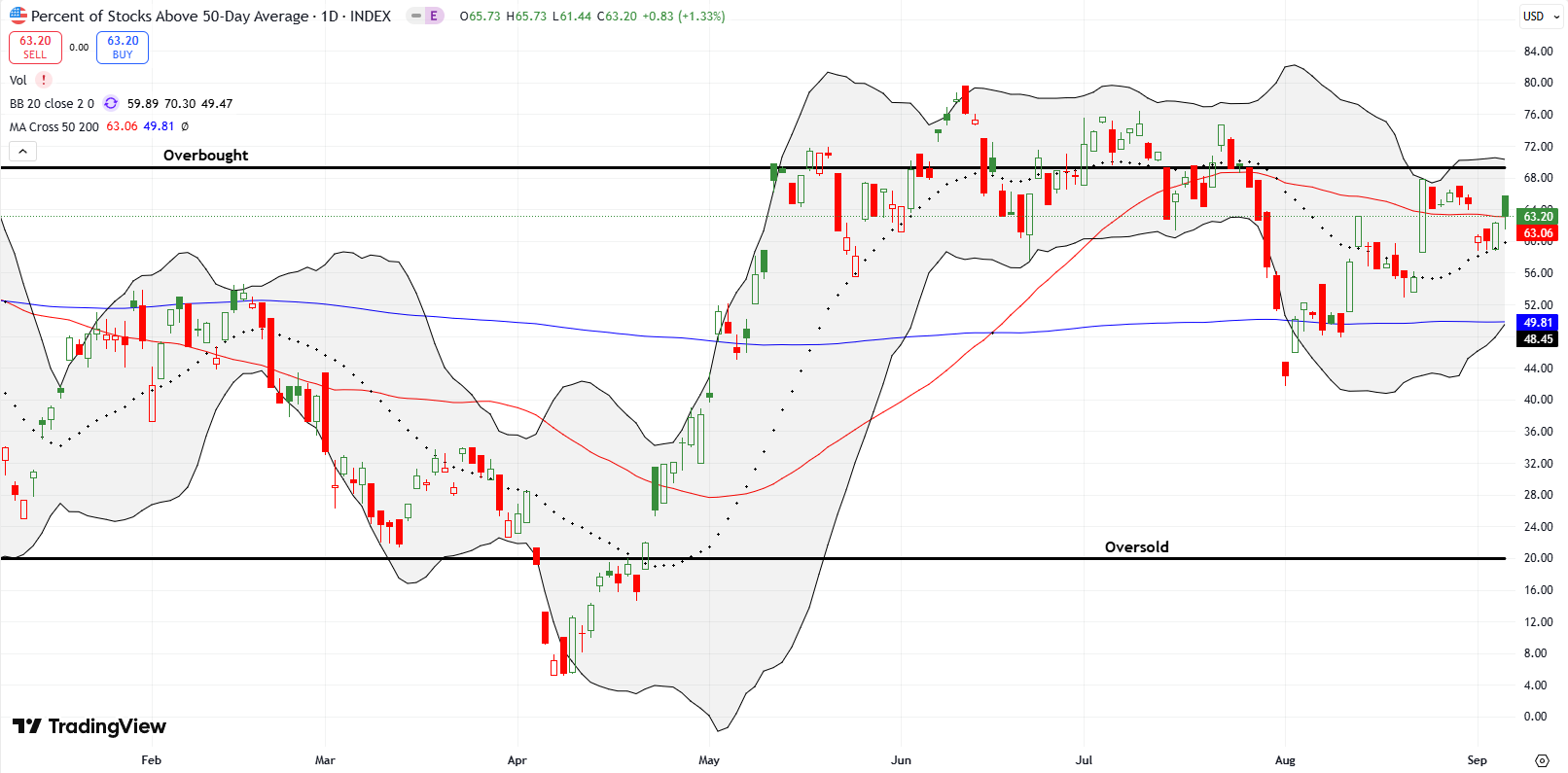
- AT50 (MMFI) = 63.2% of stocks are trading above their respective 50-day moving averages (first overbought day)
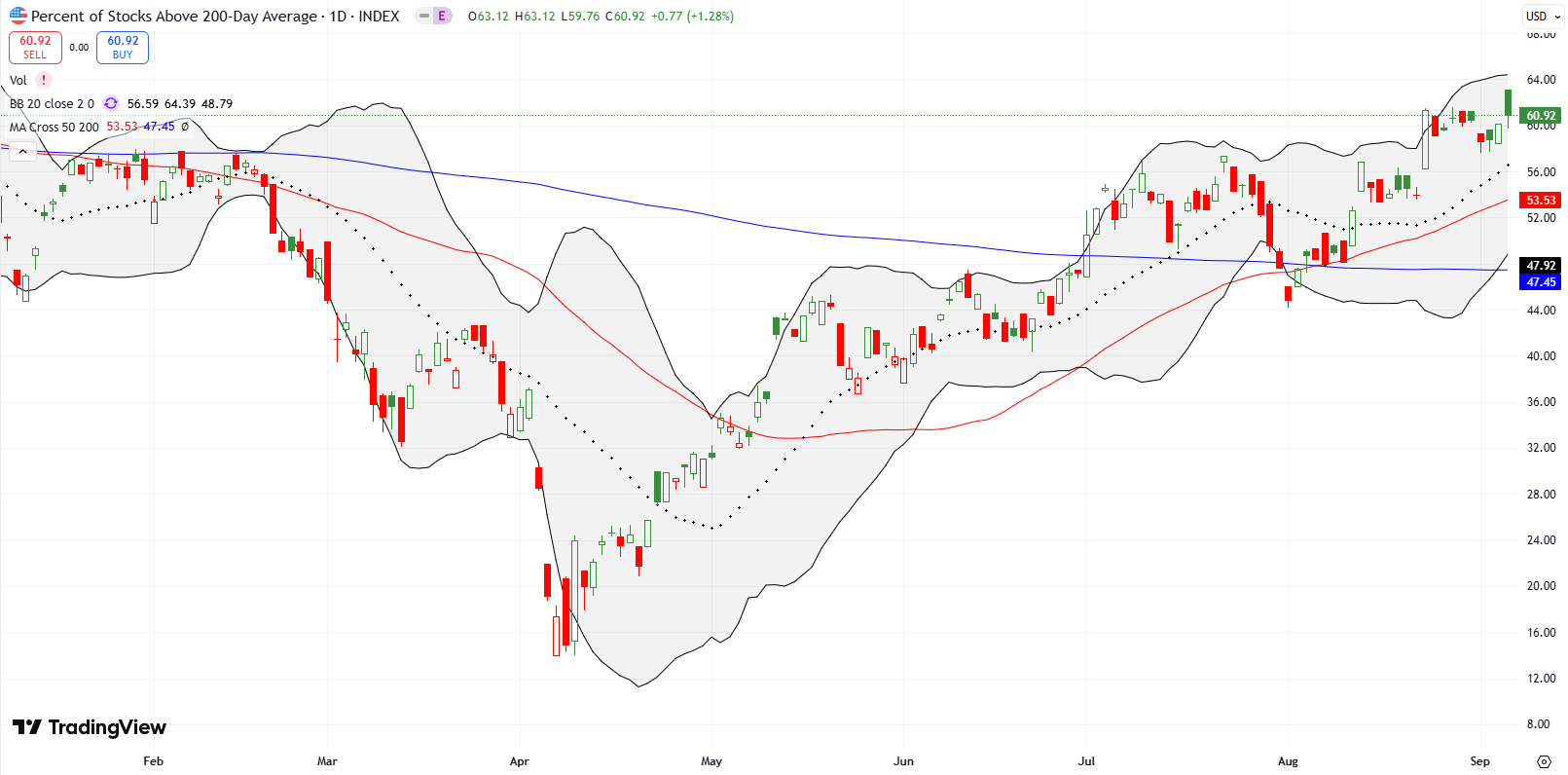
- AT200 (MMTH) = 60.9% of stocks are trading above their respective 200-day moving averages
- Short-term Trading Call: neutral
AT50 (MMFI), the percentage of stocks trading above their respective 50DMAs, closed the week at 65.7%. Market breadth jumped from 62.4% Thursday to a 65.7% open short of the overbought threshold before sellers reversed the pop. The price action captured the market’s conflicted mood: enthusiasm for rate cuts versus anxiety over economic growth.
By contrast, AT200 opened at 63.3% for a new high back to last December, faded some, but still posted a decent gain and narrowly missed the year’s high. If I only looked at AT200, I would say the underlying technicals remain very healthy (especially with the on-going 20DMA uptrends), but my short-term trading call stays neutral in deference to what I see as the potential for expanded volatility this month. After all, can the market really complete an exact repeat of August’s trading?
The Equities: Tentative
iShares 20+ Year Treasury Bond ETF (TLT)
Description: TLT is an exchange-traded fund that seeks to track the investment results of U.S. Treasury bonds with remaining maturities greater than 20 years.
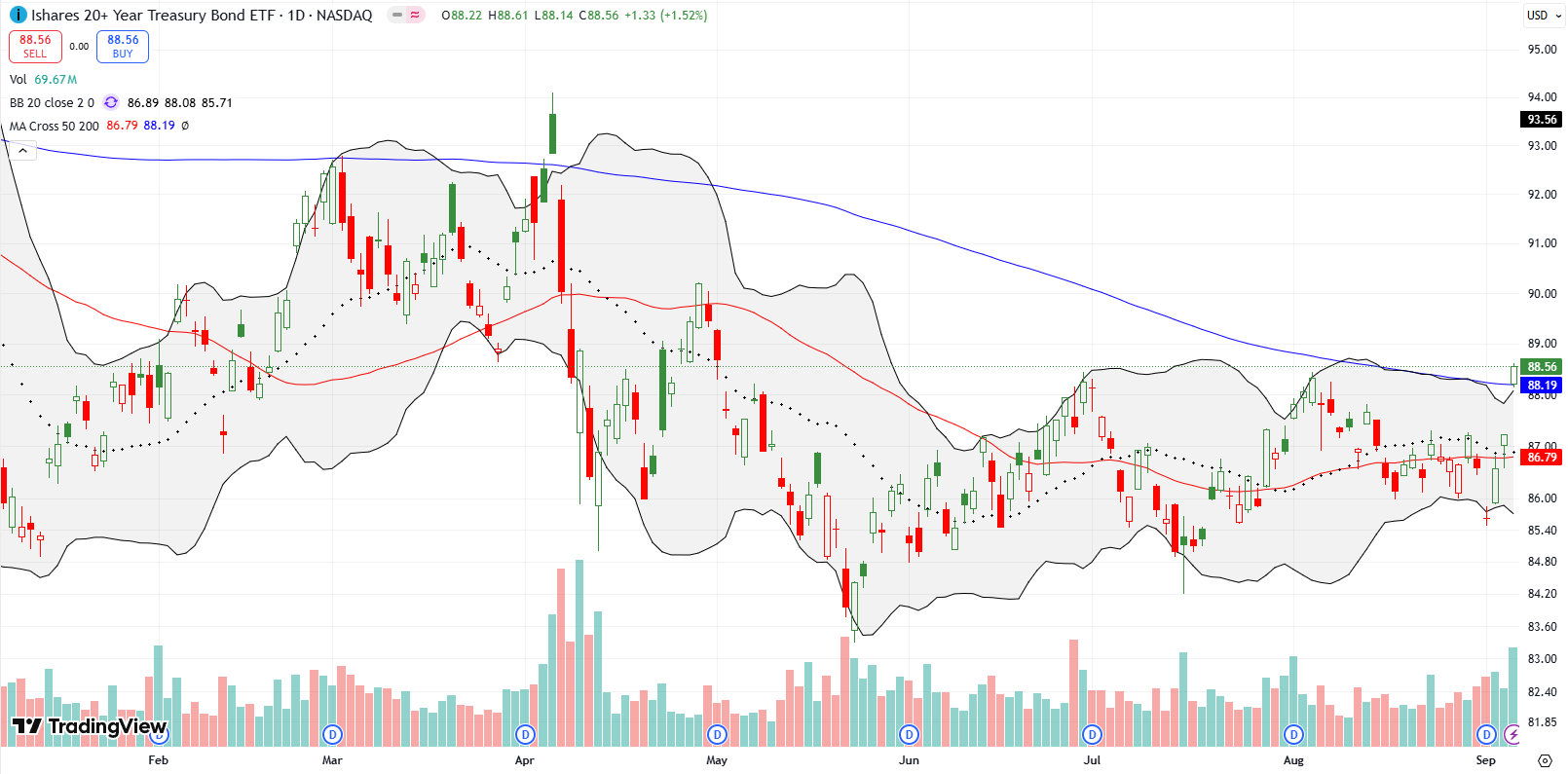
Technical status: TLT broke out above its 200DMA (the blue line) for the first time since April as investors rushed into bonds on slowdown fears; yields fall as bond prices rise.
Trade commentary: I faded this breakout consistent with my inflation-watch framework. With CPI (consumer price index) in the coming week and (core) inflation likely to remain sticky, I like staying prepared for the next TLT pullback.
SPDR Gold Shares (GLD)
Description: GLD is an exchange-traded fund designed to track the price performance of gold.
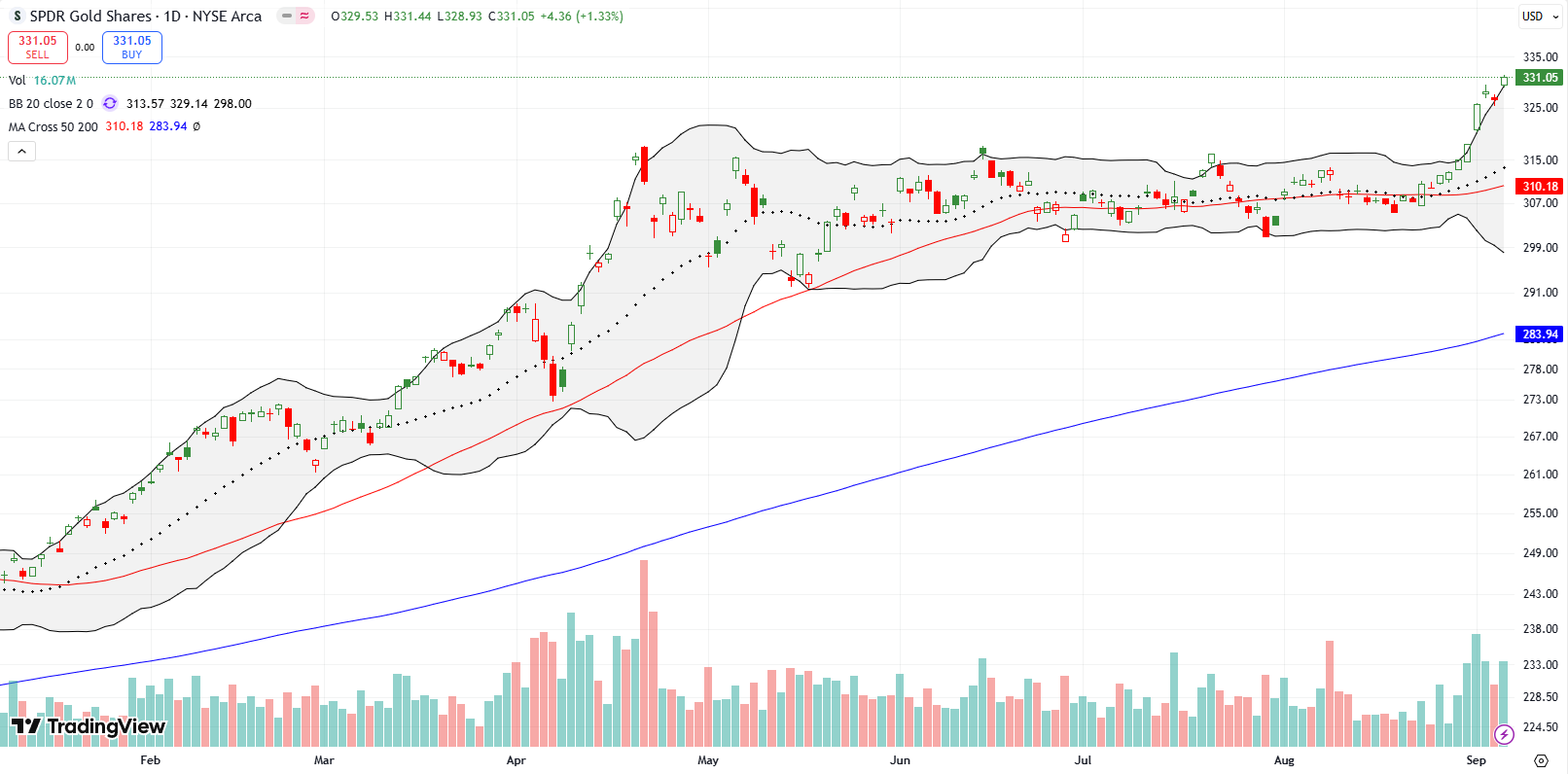
Technical status: GLD broke out with a massive 2.4% gain to start the holiday-shortened week and held a positive bias as the market anticipated rate cuts into an inflationary backdrop.
Trade commentary: I am long a call spread and will look to add on the next pullback; gold benefits from lower short-term rates in a sticky inflation environment.
iShares U.S. Home Construction ETF (ITB)
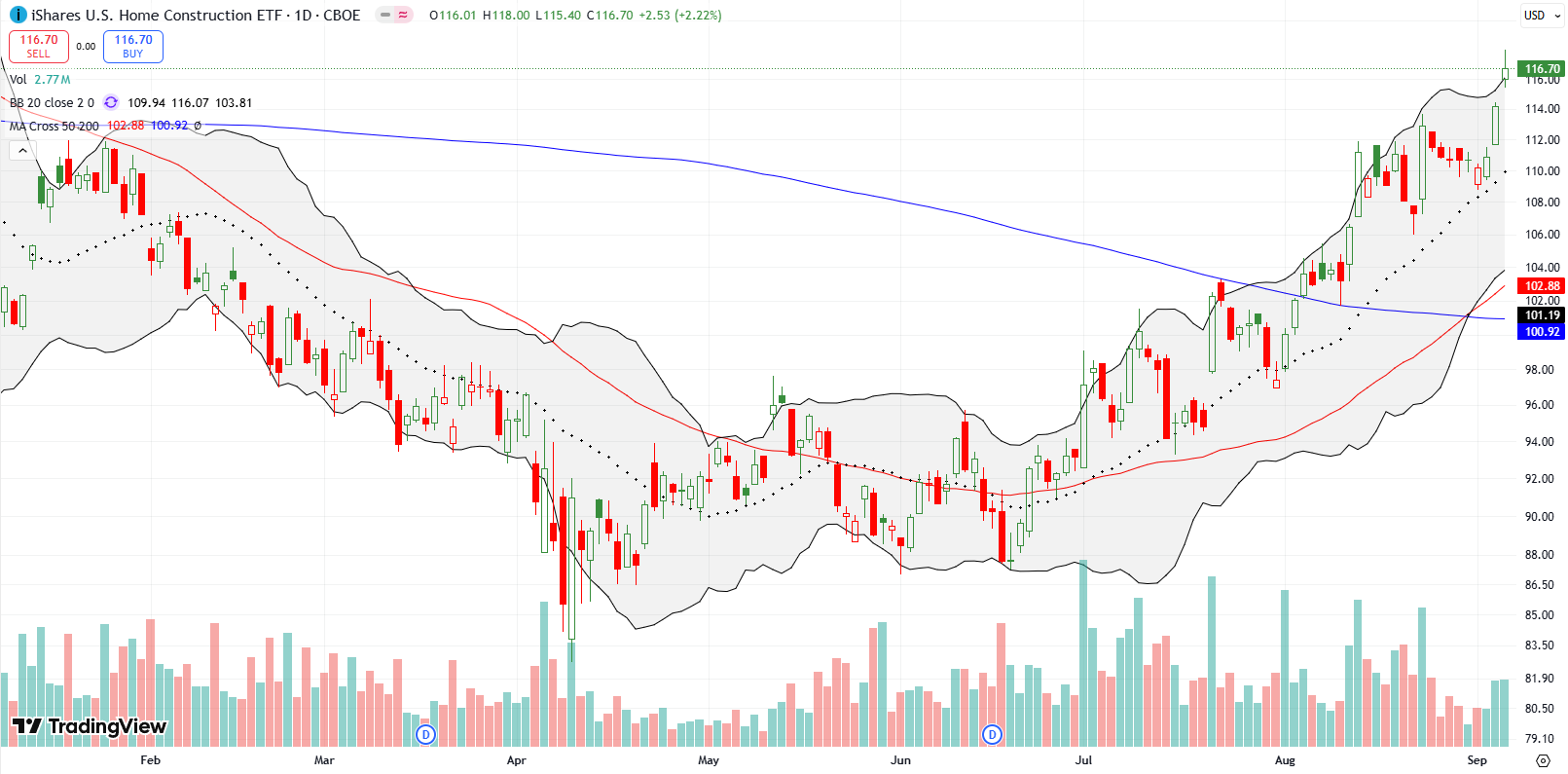
Description: ITB is an exchange-traded fund that tracks a market-cap-weighted index of U.S. home construction and related companies.
Technical status: The bearish-to-bullish turn came to a successful conclusion as ITB popped 2.2%, consistent with the conventional rate-sensitivity of home builders. Tight inventory and high prices remain the macro wrinkle.
Trade commentary: I took profits on ITB call options into Friday’s pop. I still hold a large core position and have one more builder against which I sold a call. I am watching for the surprise risk that falling rates ignite prices more than sales, which would reinforce my stance on gold.
Broadcom, Inc (AVGO)
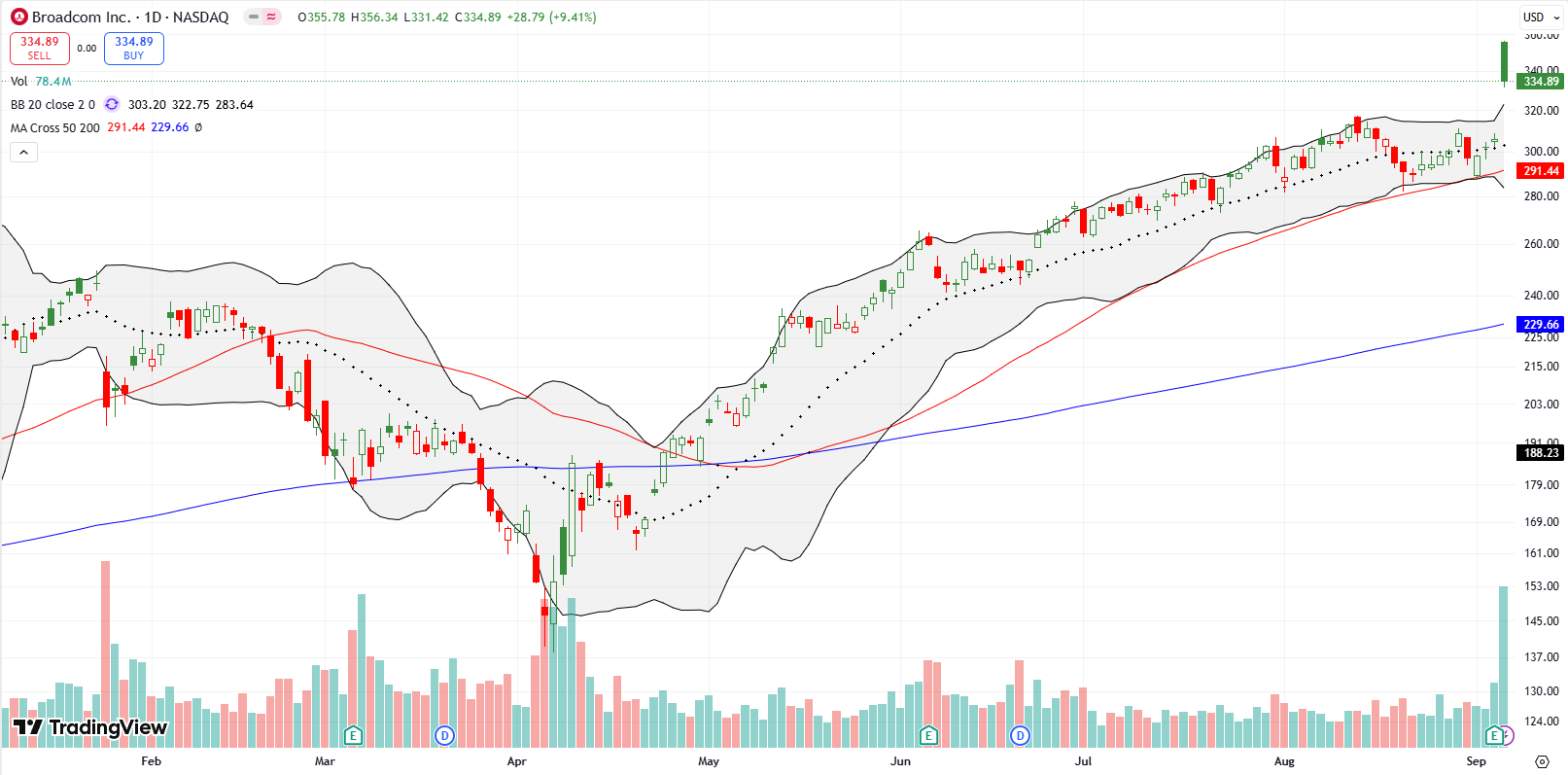
Description: Broadcom (AVGO) designs, develops, and supplies semiconductor and infrastructure software solutions for data center, networking, storage, broadband, and wireless markets.
Technical status: Support at the 50DMA held like a champ as AVGO bounced repeatedly off that support and then exploded higher after earnings, closing up 9.4% after an even stronger open. The trend stayed constructive with a slight upward bias into the report.
Trade commentary: I bought a call spread when my scan using swingtradebot flagged the 50DMA test. I did not realize that the expiration was set for the day after the earnings report. Given the strong technicals, I decided to take a risk and hold. While I never advocate using technicals to guess at the market’s likely response to earnings, I of course was elated to have this trade work out spectacularly well. Sometimes the clean technical setup into earnings just lines up. However, management’s commentary on custom AI chips sent tremors across various AI trades…
NVIDIA (NVDA)
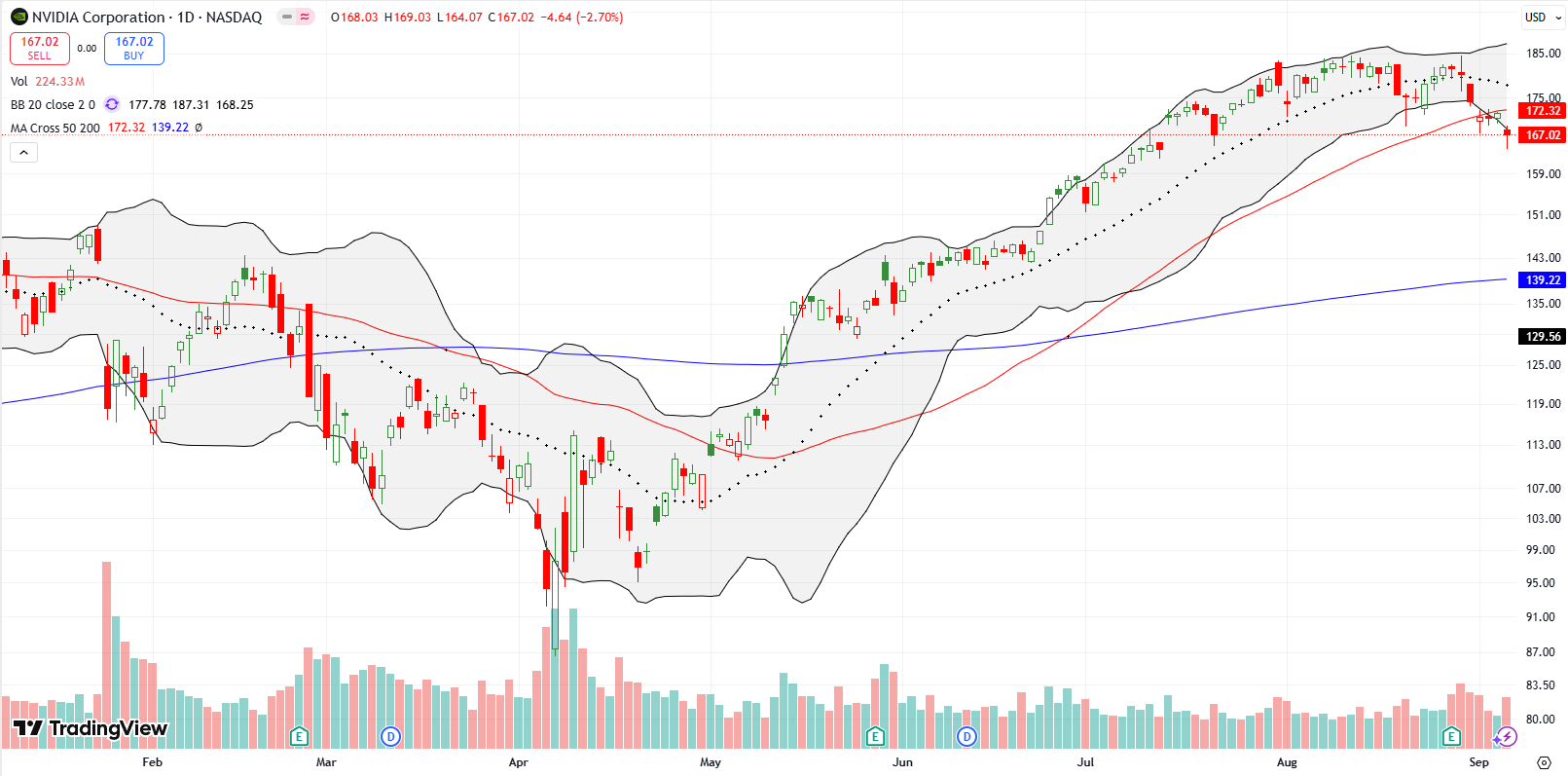
Description: NVIDIA (NVDA) provides accelerated computing platforms, including GPUs and software for data center, gaming, professional visualization, and automotive markets.
Technical status: The subtle double top I flagged a week ago is now confirmed with a 50DMA breakdown. NVDA fell 2.7% and even traded below its lower Bollinger Band (BB) while the broader market tried to celebrate slowing employment.
Trade commentary: I did not chase NVDA lower and have no position. I might consider a short only on further weakness. Given NVDA’s status as a beloved stock, dip buyers should soon arrive on the scene unless the entire stock market rolls over.
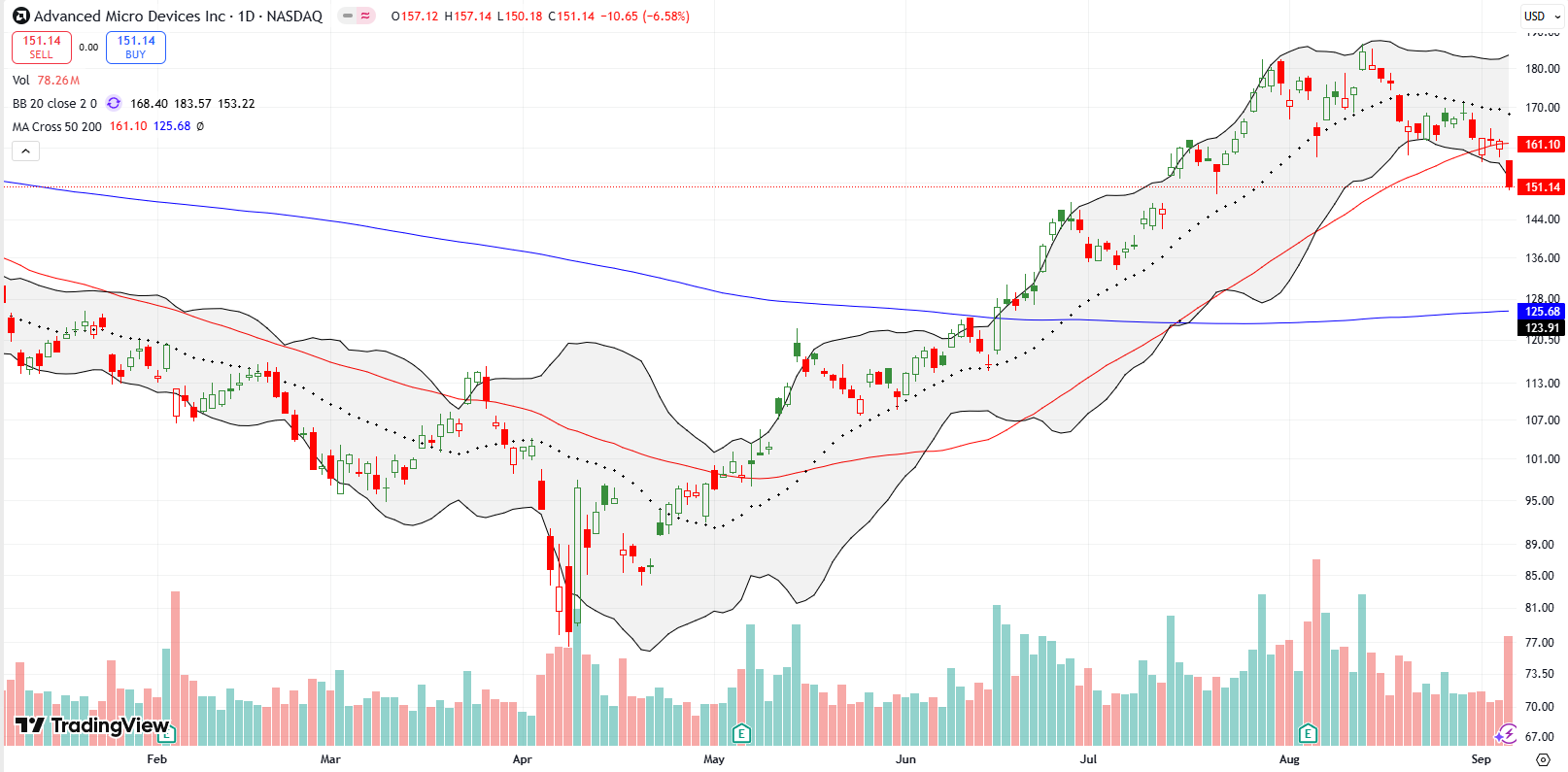
Advanced Micro Devices (AMD)
Description: Advanced Micro Devices (AMD) designs CPUs, GPUs, and related semiconductor products for client, data center, and gaming applications.
Technical status: Buyers failed to step in at the lows as AMD dropped 6.7% on Friday. The stock clung to 50DMA support earlier in the week, but AVGO earnings delivered a clean break. Support at the 200DMA is the next big line to watch.
Trade commentary: I am committed to AMD long term and holding through this breakdown.
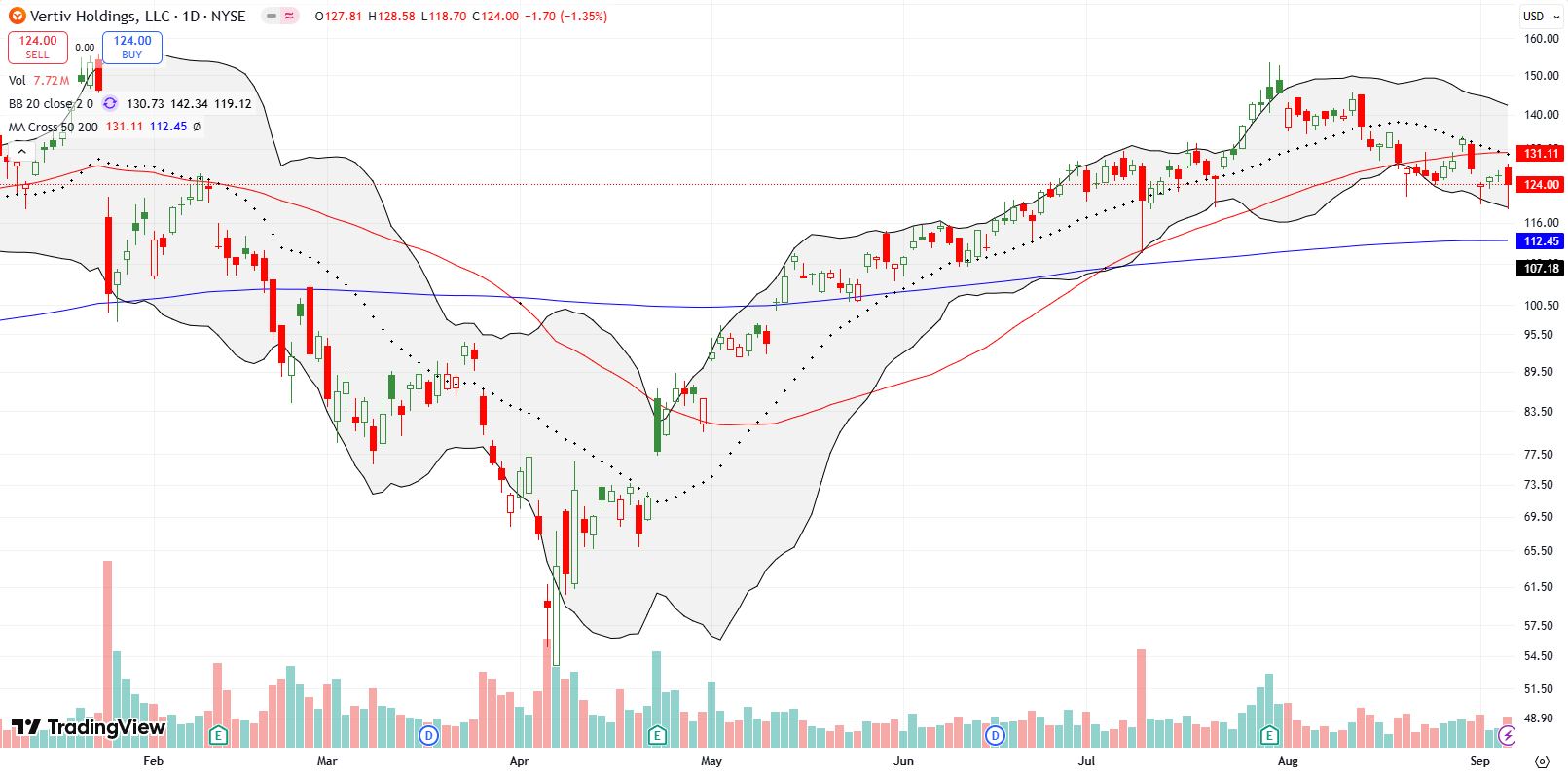
Vertiv Holdings, LLC (VRT)
Description: Vertiv (VRT) provides critical digital infrastructure and services for data centers, communication networks, and industrial facilities.
Technical status: Weakness started in mid-August. I bought more VRT shares near 50DMA support. However, a tepid post-earnings response and a near double top formed by stopping just short of all-time highs make me worry that the pullback could deepen toward the 200DMA.
Trade commentary: If VRT tests 200DMA support, I will assess whether to add even more shares…depending on the overall trading context at the time.
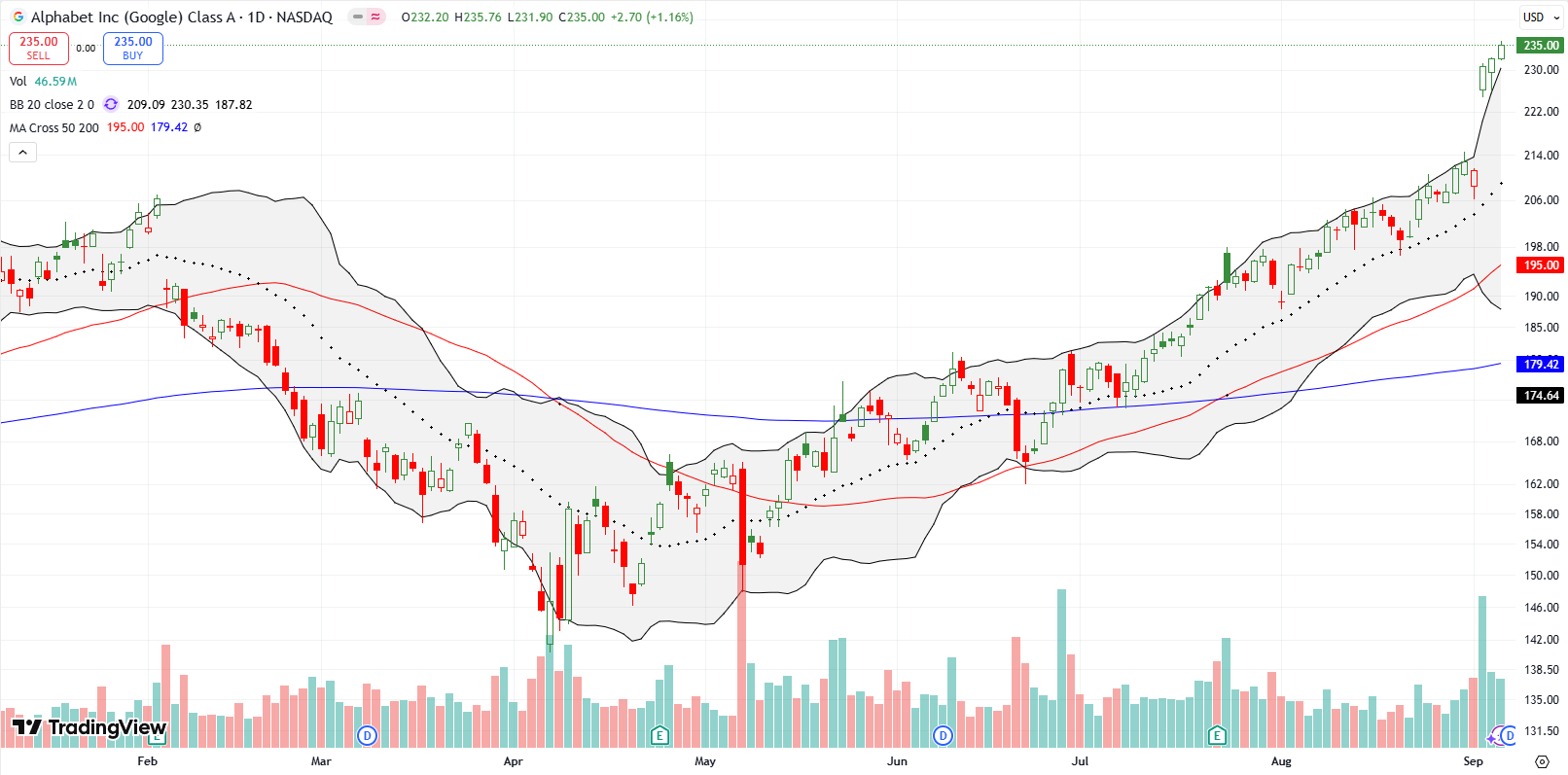
Alphabet/Google (GOOG)
Description: Alphabet (GOOG) operates global platforms for online search, digital advertising, cloud services, AI, hardware, and YouTube.
Technical status: GOOG received major anti-trust relief and soared 9.0% to an all-time high. Buyers kept up the pressure right into the week’s close despite fades in the major indices. The move definitively preserves an uptrend that has been a “nice and easy ride” since July earnings. I will wait for a pullback to defined support, with 220 as a clean level in mind. Being without a GOOG position at this time is a major miss for me given the cleat technical uptrend.
Trade commentary: I should have been buying after July earnings given my bullish stance on AI, cloud, ads, search, and YouTube TV. At this point, I am letting momentum run and watching for the next good risk-reward entry.
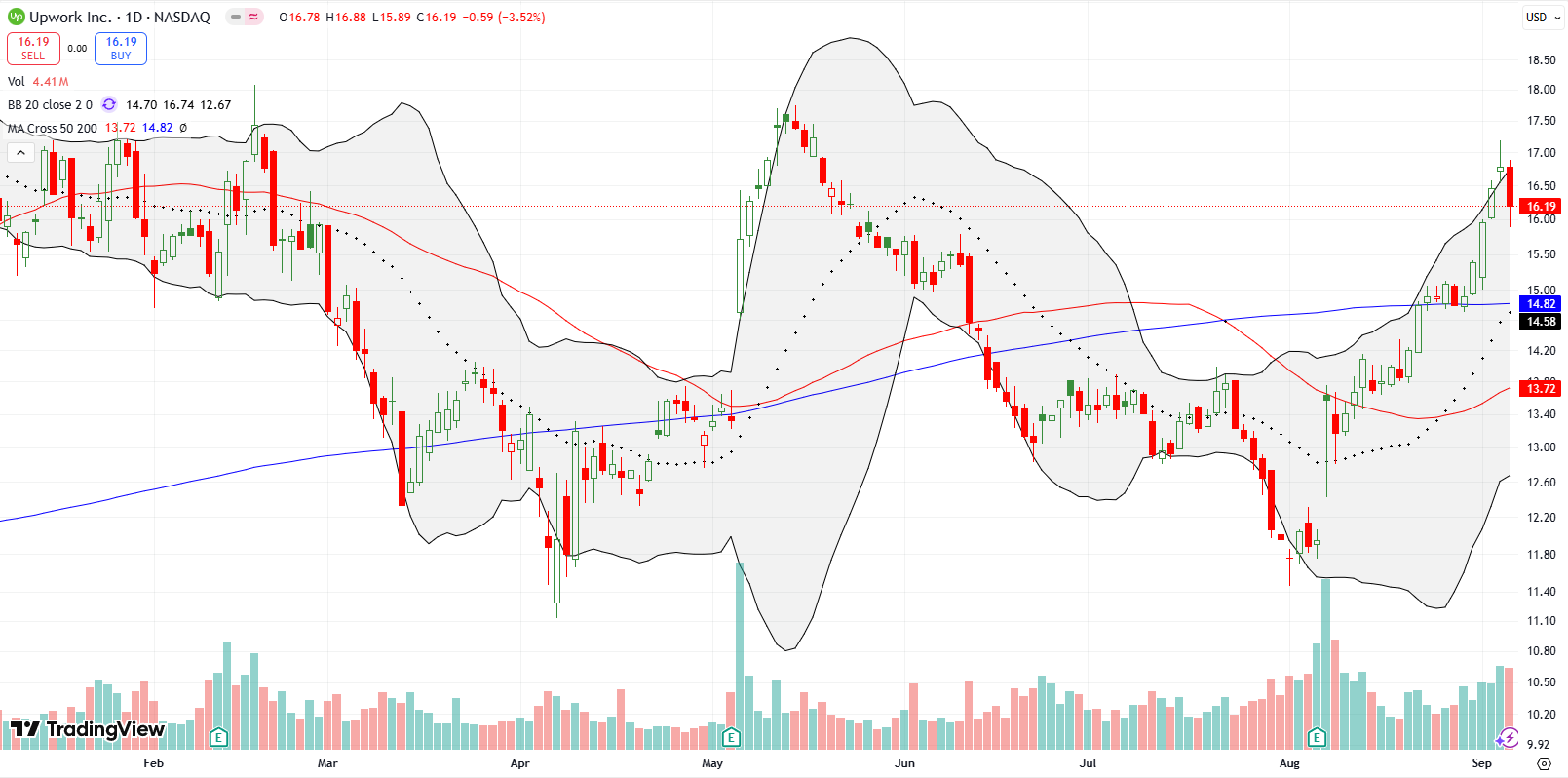
Upwork (UPWK)
Description: Upwork (UPWK) operates an online marketplace that connects businesses with independent professionals and agencies.
Technical status: UPWK fell 3.5% on the slowing jobs narrative and stopped short of its prior high. The stock risks topping out here unless it finds support at its 50DMA, 20DMA, or 200DMA to set up the next rebound.
Trade commentary: My interest in UPWK deepened during the pandemic days. Yet, I missed the clean setup at 200SMA. Now, I will wait for the next clean test of support before reconsidering. UPWK has been stuck in a 3-year trading range, so there is no need to chase the stock.
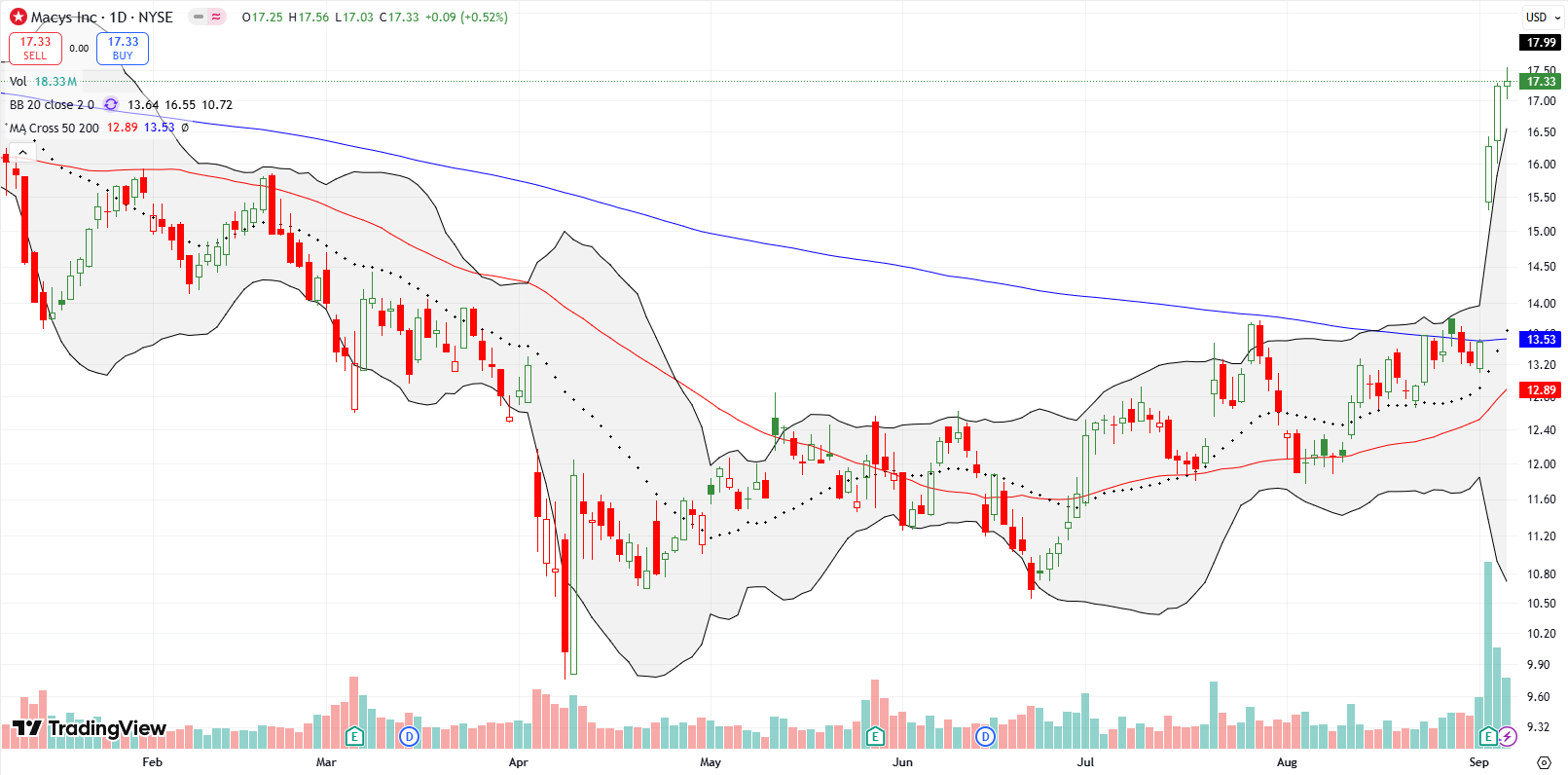
Macy’s (M)
Description: Macy’s (M) operates a nationwide department store chain with associated e-commerce properties.
Technical status: Macy’s ripped higher 20.7% post-earnings and kept momentum into Friday’s close. Still, the stock sits below its last December peak. Moreover, its long downtrend remains well-intact.
Trade commentary: This surge matters for short-term traders. Given the longer term downtrend, I am not interested in the stock unless it closes above the December high. Until then, M i just in the middle of yet another relief rally.
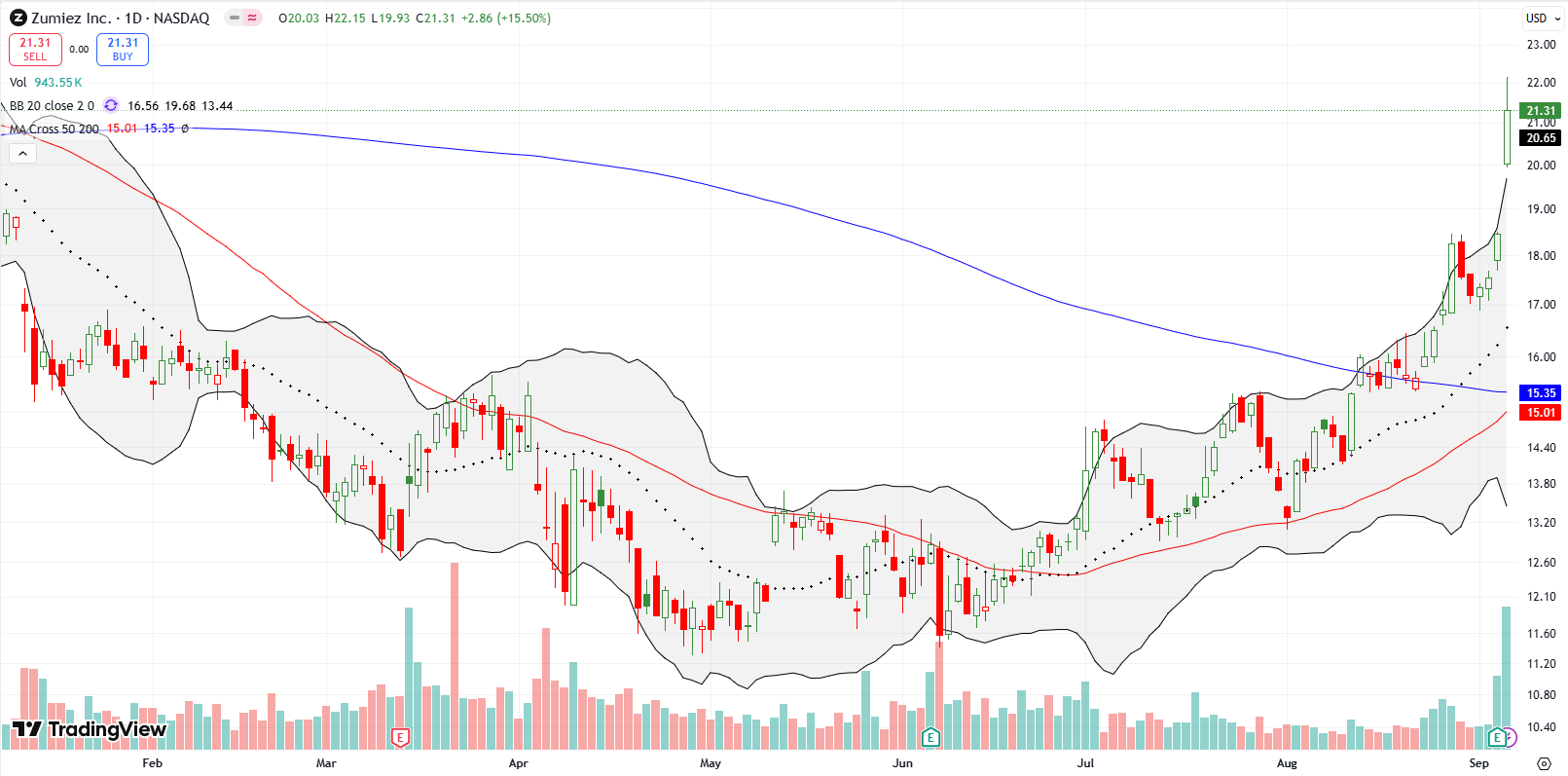
Zumiez (ZUMZ)
Description: Zumiez (ZUMZ) is a specialty retailer of apparel, footwear, accessories, and hardgoods for young men and women.
Technical status: Shares jumped 15.5% post-earnings and closed well above the upper Bollinger Band. ZUMZ remains stuck in a multi-year trading range.
Trade commentary: I am not buying here; I would wait for a cool-down or pullback. The trading range favors buying weakness near lows and taking profits near peaks.
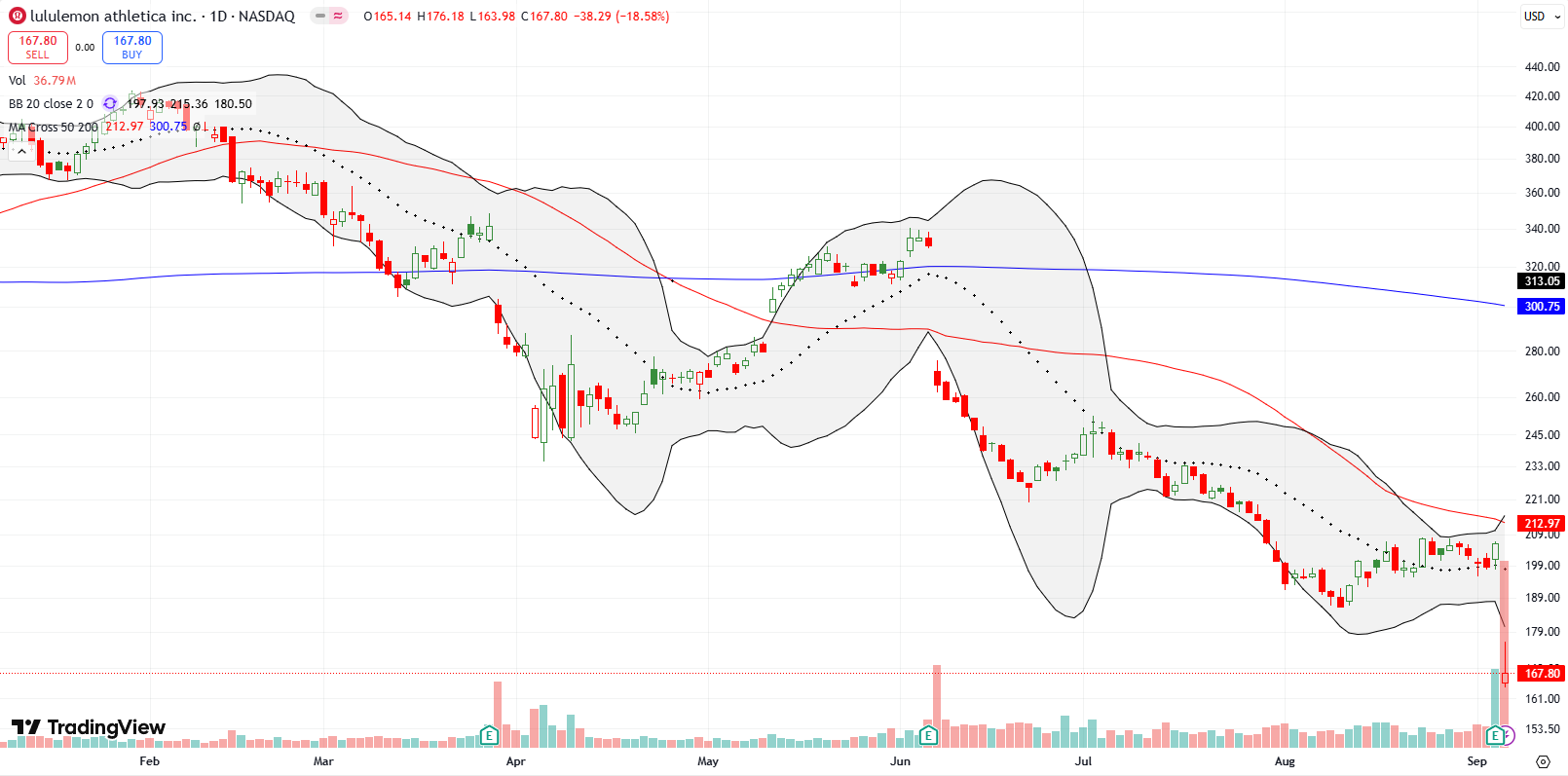
Lululemon Athletica (LULU)
Description: Lululemon Athletica (LULU) designs and sells athletic apparel, accessories, and related products through retail stores and e-commerce.
Technical status: Post-earnings, LULU cratered 18.6%. The stock broke its extended post-pandemic trading range last year, failed near the all-time high on the rebound, and has trended down ever since including two fake-outs popping above its 200DMA.
Trade commentary: My attempts to time relief rallies and fresh breakdowns have whipsawed me. Still, unless fundamentals change (not likely anytime soon), I will stay focused on fading strength.
Be careful out there!
Footnotes
Subscribe for free to get email notifications of future posts!
“Above the 50” (AT50) uses the percentage of stocks trading above their respective 50-day moving averages (DMAs) to measure breadth in the stock market. Breadth defines the distribution of participation in a rally or sell-off. As a result, AT50 identifies extremes in market sentiment that are likely to reverse. Above the 50 is my alternative name for “MMFI” which is a symbol TradingView.com and other chart vendors use for this breadth indicator. Learn more about AT50 on my Market Breadth Resource Page. AT200, or MMTH, measures the percentage of stocks trading above their respective 200DMAs.
Active AT50 (MMFI) periods: Day #57 over 20%, Day #55 over 30%, Day #50 over 40%, Day #23 over 50%, Day #10 over 60% (overperiod), Day #30 under 70% (underperiod)
Source for charts unless otherwise noted: TradingView.com
Full disclosure: long IWM shares and call options, long GLD call spread, long SPY put spreads, long TLT puts, long ITB, long AMD, long VRT
FOLLOW Dr. Duru’s commentary on financial markets via StockTwits, BlueSky, and even Instagram!
*Charting notes: Stock prices are not adjusted for dividends. Candlestick charts use hollow bodies: open candles indicate a close higher than the open, filled candles indicate an open higher than the close.
* Blog notes: this blog was written based on the heavily edited transcript of the following video that includes a live review of the stock charts featured in this post. I used ChatGPT to process the transcript.