

Stock Market Commentary
The stock market transitioned from a nervous calm to a confident calm. The NASDAQ and S&P 500 hit fresh all-time highs faster than I could have expected during the depths of the tariff drama, trauma, and noise. Nvidia (NVDA) led the way with a mid-week breakout to all-time highs. The market’s confident calm has already put war in the Middle East in the rearview mirror. Even a late Friday collapse in trade negotiations between the U.S. and Canada failed to deter the confident calm as buyers pounced on the intraday dip.
While the market revels in its confident calm, I am keeping my eye on three main narratives.
Tariff headlines are top of mind. The market suffered an extremely shallow reaction to the collapse of trade talks with Canada. This quick comeback provides an early sign that future trade setbacks will not send the market to the trauma, drama, and noise of March and April. Thus, tariff-related dips will likely remain short-term buying opportunities. Moreover, the market’s main concern has been the economic warfare between the U.S. and China. Those risks came down sharply after China confirmed details of the most recent trade agreement.
Monetary policy follows right behind trade on my watchlist. Some Federal Reserve officials are trying to pave the path to rate cuts, particularly by claiming that tariffs will not likely have a material impact on inflation (I will write more about this development on my Inflation Watch blog). This waning concern directly contradicts Chair Jerome Powell’s message from the last press conference on monetary policy. More importantly, the messages from these officials contradict the broad evidence the Fed collected in its last Beige Book about businesses’ experience with and plans for price hikes from tariffs. Given the market’s longing desires for lower rates, an over-extension of its enthusiasm anticipating rate cuts will leave the market vulnerable to setbacks in the inflation data.
Finally, there is a technical yellow flag hiding behind the market’s confident calm: a mild bearish divergence with market breadth. Market breadth briefly returned to overbought territory on Tuesday, but promptly reversed the next day. Until market breadth returns to overbought territory, I will consider the index all-time highs at (short-term) risk for a significant cooling.
The Stock Market Indices
S&P 500 (SPY)
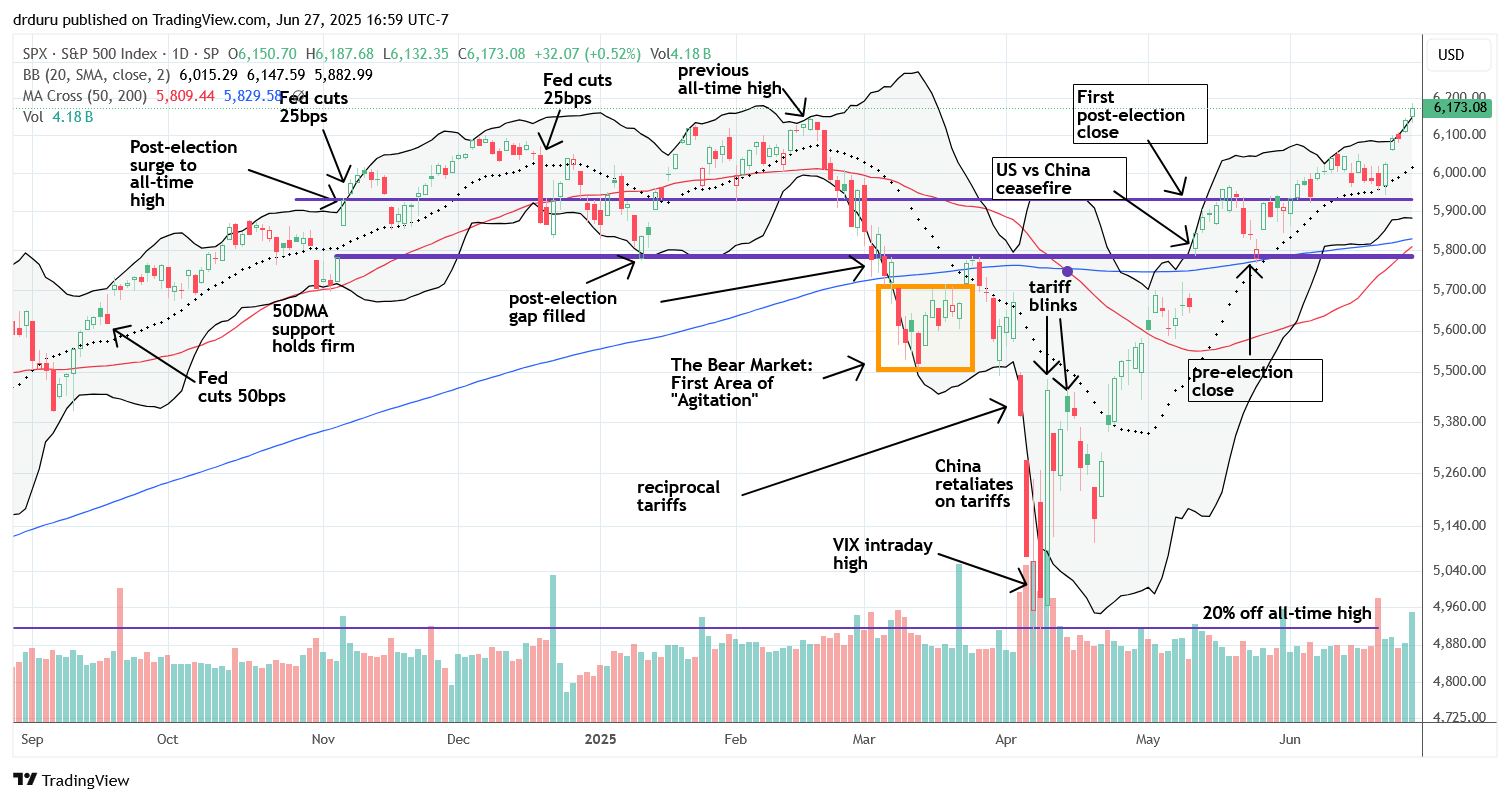
The S&P 500 eclipsed its February 20 all-time high of 6,173.08 and closed above its upper Bollinger Band (BB). The index has closed at or above its upper BB four straight trading days ever since Tuesday’s gap higher. BB run-ups created stretched technical conditions, with each day’s high increasing the odds for some kind of pullback. As has been the case since the S&P 500 broke out above its 200-day moving average (DMA) (the blue line) on a US vs China trade ceasefire, I am relying on layers of support to hold the index up against short-term pullbacks.
NASDAQ (COMPQ)
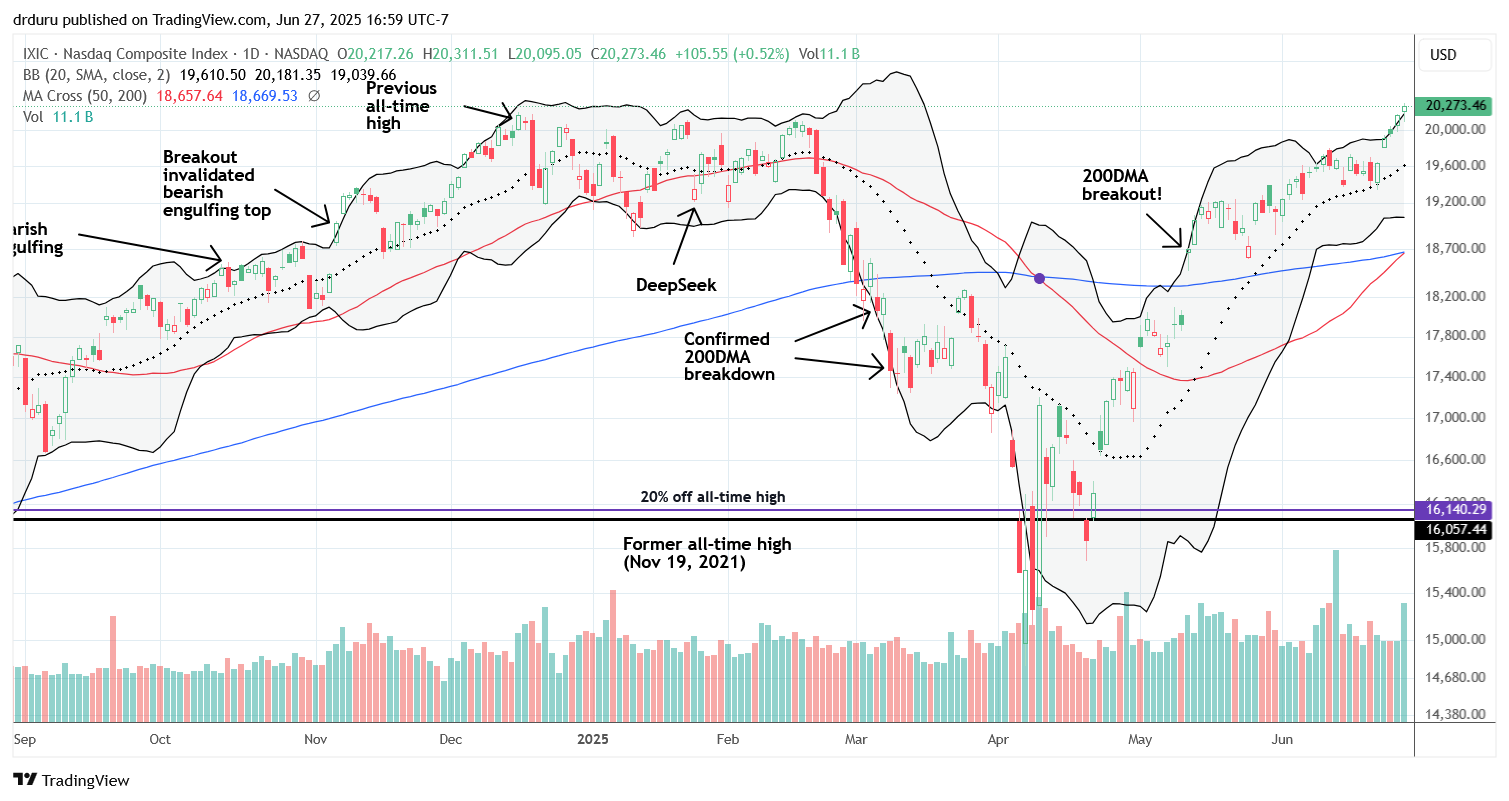
Fresh all-time highs on the NASDAQ came with four consecutive days of closes at or above the upper Bollinger Band. Historically, this kind of over-extension precedes a pullback to support at the 20DMA (the dashed line) (just look at 2024 in the chart below), but the on-going strength in the stock market means this run-up could continue for many more days before the expected pullback.
iShares Russell 2000 ETF (IWM)
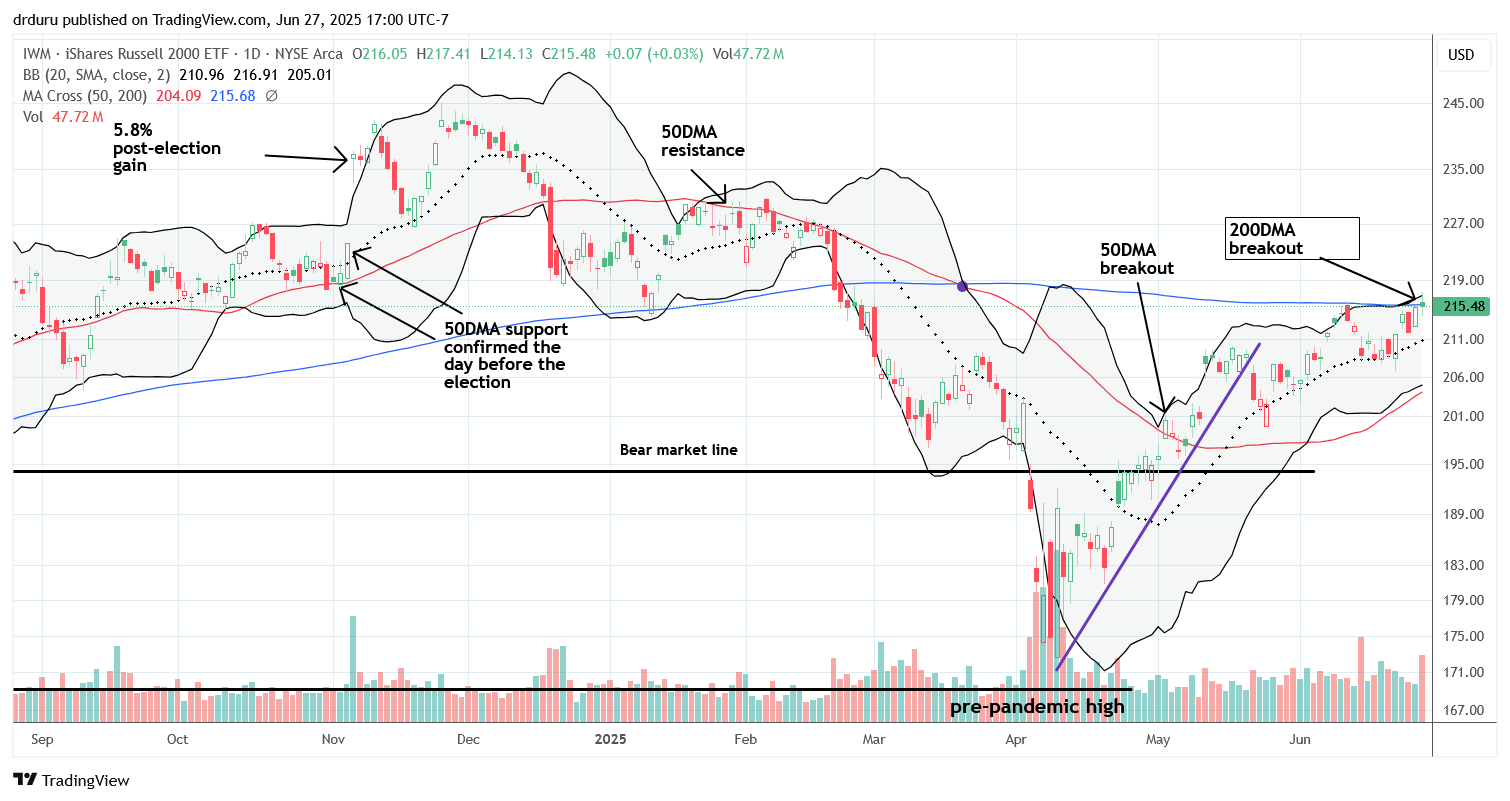
The Russell 2000 remains flat and underperforms the larger indices. The ETF of small caps ended the week right on top of its 200DMA resistance (actually a hair below). I am waiting for a validated breakout before considering buying the next batch of IWM call options. My last trade worked out well after tripling down on Monday’s recovery from an intraday 20DMA breakdown.
The Short-Term Trading From Fragile to Fearless
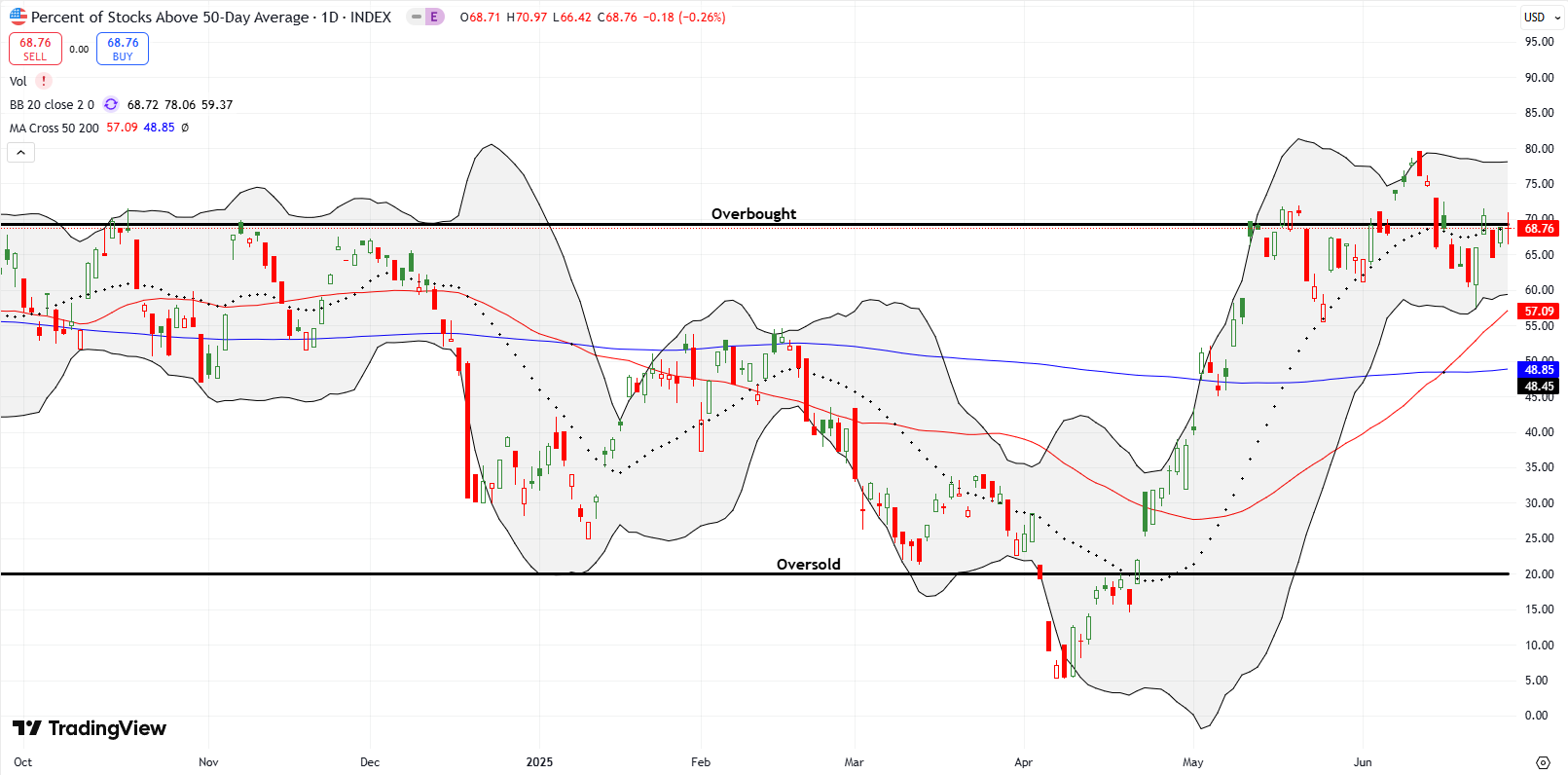
- AT50 (MMFI) = 68.8% of stocks are trading above their respective 50-day moving averages (first overbought day)
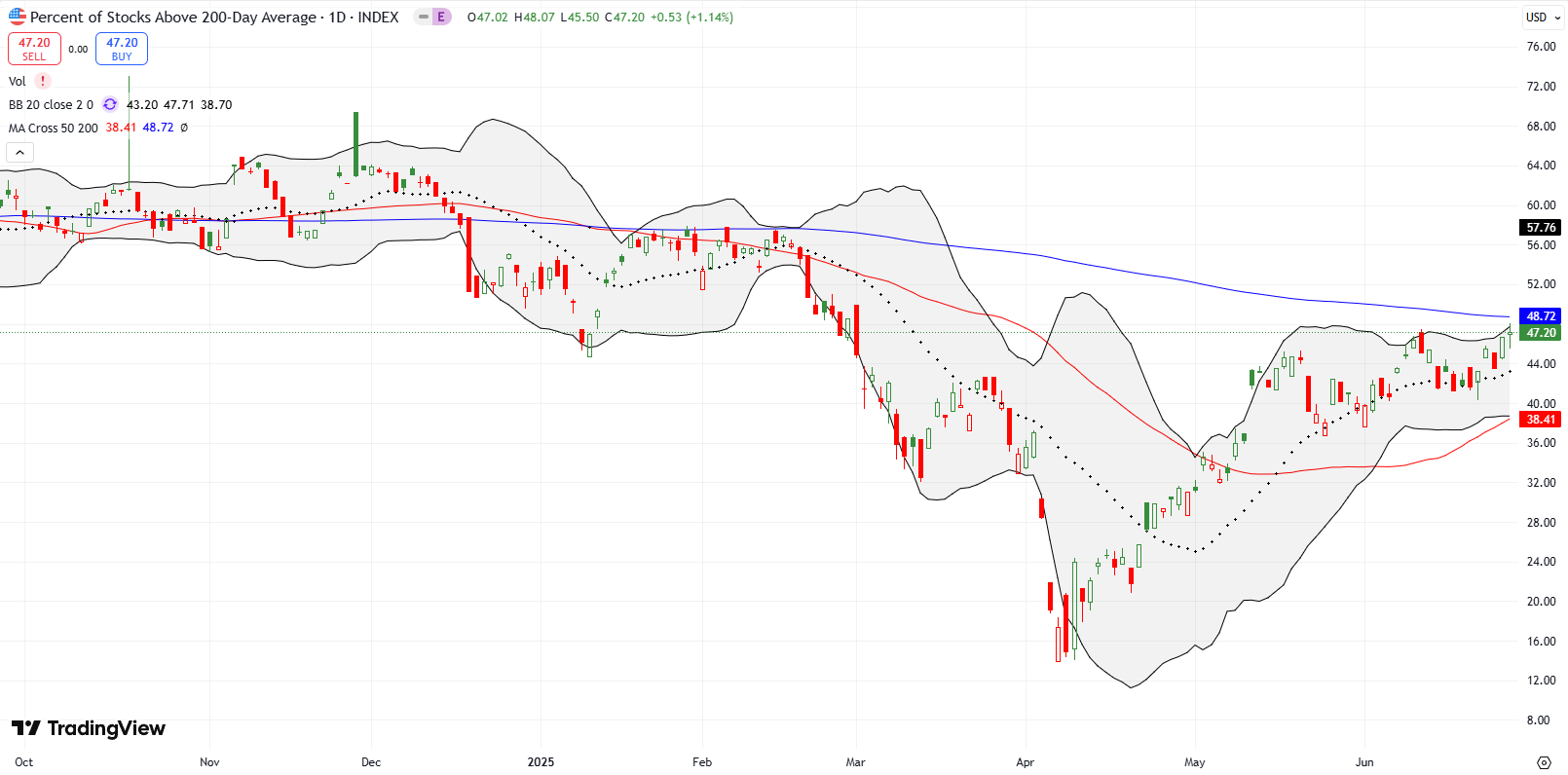
- AT200 (MMTH) = 47.2% of stocks are trading above their respective 200-day moving averages
- Short-term Trading Call: cautiously bullish
AT50 (MMFI), the percentage of stocks trading above their respective 50DMAs, struggled all week with the overbought threshold at 70%. My favorite technical indicator closed the week at 68.8%. Thus, AT50 created a mild bearish divergence with the major indices notching all-time highs, creating a yellow flag. According to the AT50 trading rules, falling from overbought trading conditions triggers a bearish trading call. However, I continue to use the discretion a well-supported market affords me. The strong floor beneath price action makes flipping bearish overly aggressive and premature.
The bearish divergence shows up in other ways. IWM is, of course, a major laggard while it struggles with 200DMA resistance. Similarly, AT200 (MMTH), the percentage of stocks trading above their 200DMAs, only closed at 47.2%. While the uptrend continues and points to an eventual breakout above the next downtrend line, AT200 suggests that at least half the stock market is nowhere near all-time highs. A stock cannot print an all-time high while still trading below its 200DMA, not to mention all the distance the stock will need to travel after a 200DMA breakout to test its former all-time high. This significant divergence reminds me how individual stocks are rentals, not soulmates. Accordingly, in coming weeks (before earnings), I will trim the weakest members of the portfolio and hope that the stronger ones join the all-time high party in due time.
The Volatility Index (VIX)
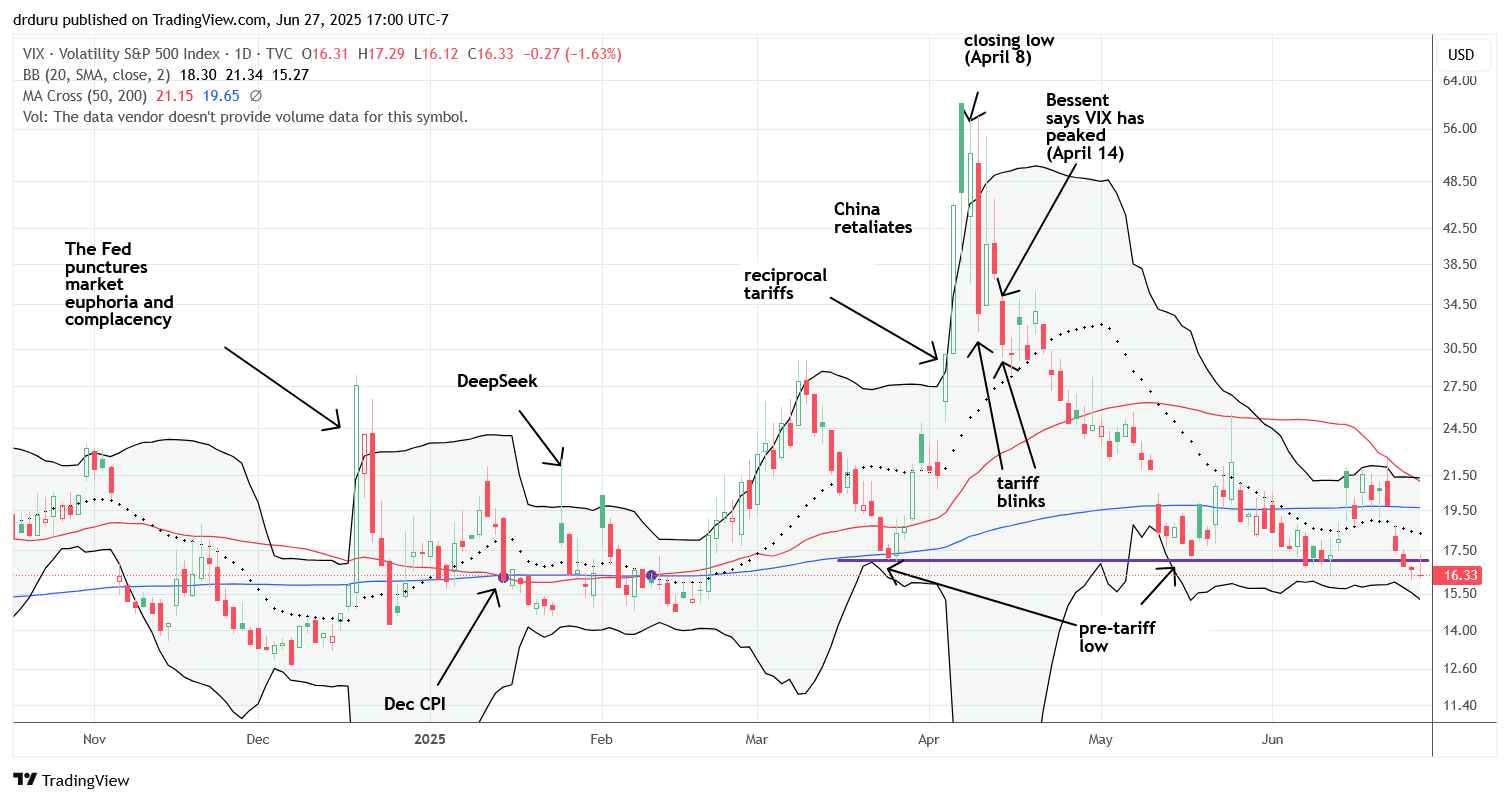
The VIX fell below pre-tariff levels and continues to edge lower. While I am concerned with complacency, this decline also underscores robust buying power driving the market’s confident calm.
The Equities: Confident Calm
SPDR Gold Trust (GLD)
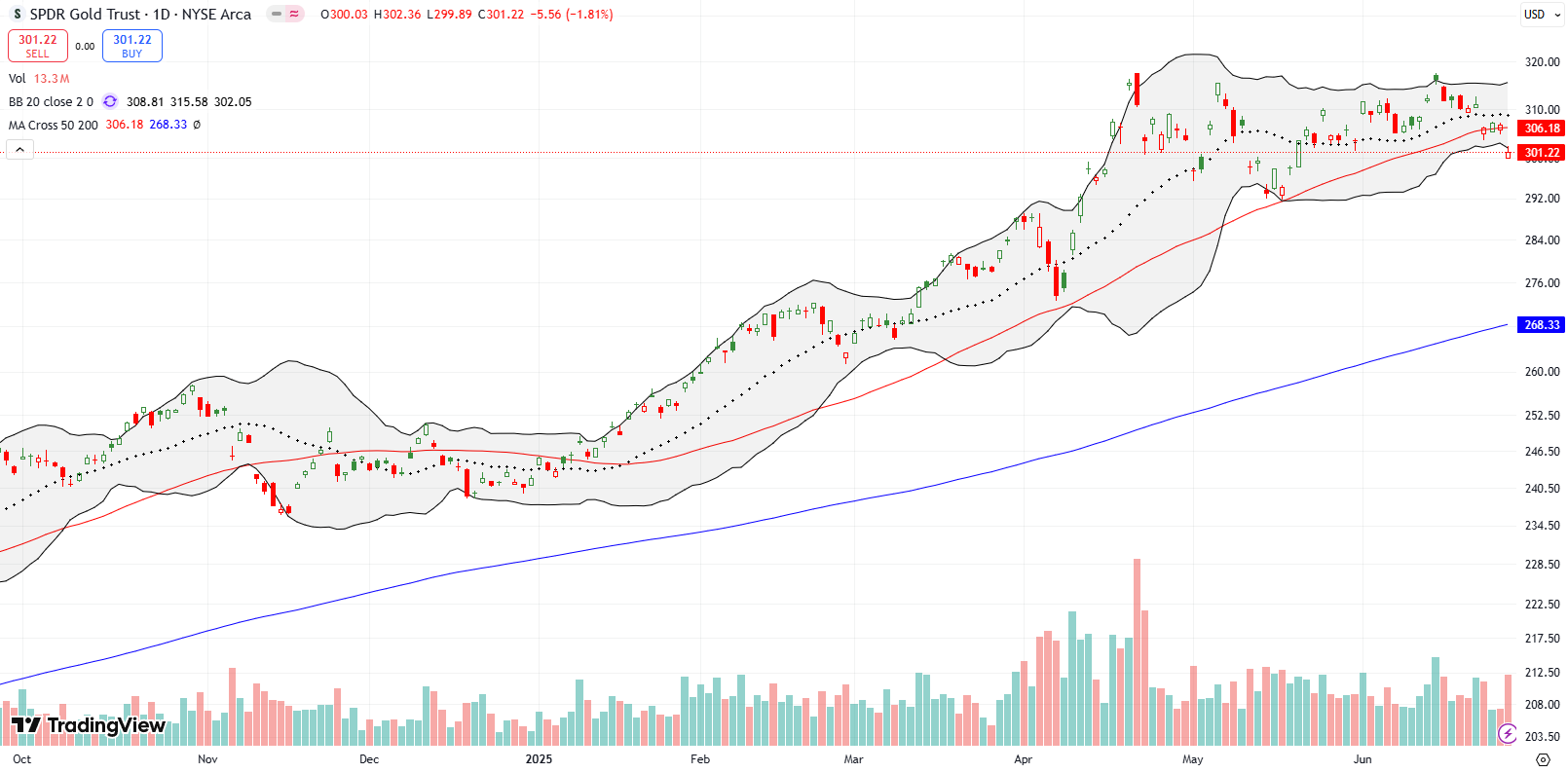
The confidence calm in the stock market sent GLD below its 50DMA for the first time this year. The likely next support lies around $293 (last 50DMA test on May 16), with a deeper cushion near $270 (200DMA). I have an outstanding call spread on GLD and do not see a need to buy GLD again until a breakout or test of key supports.
NVIDIA Corporation (NVDA)
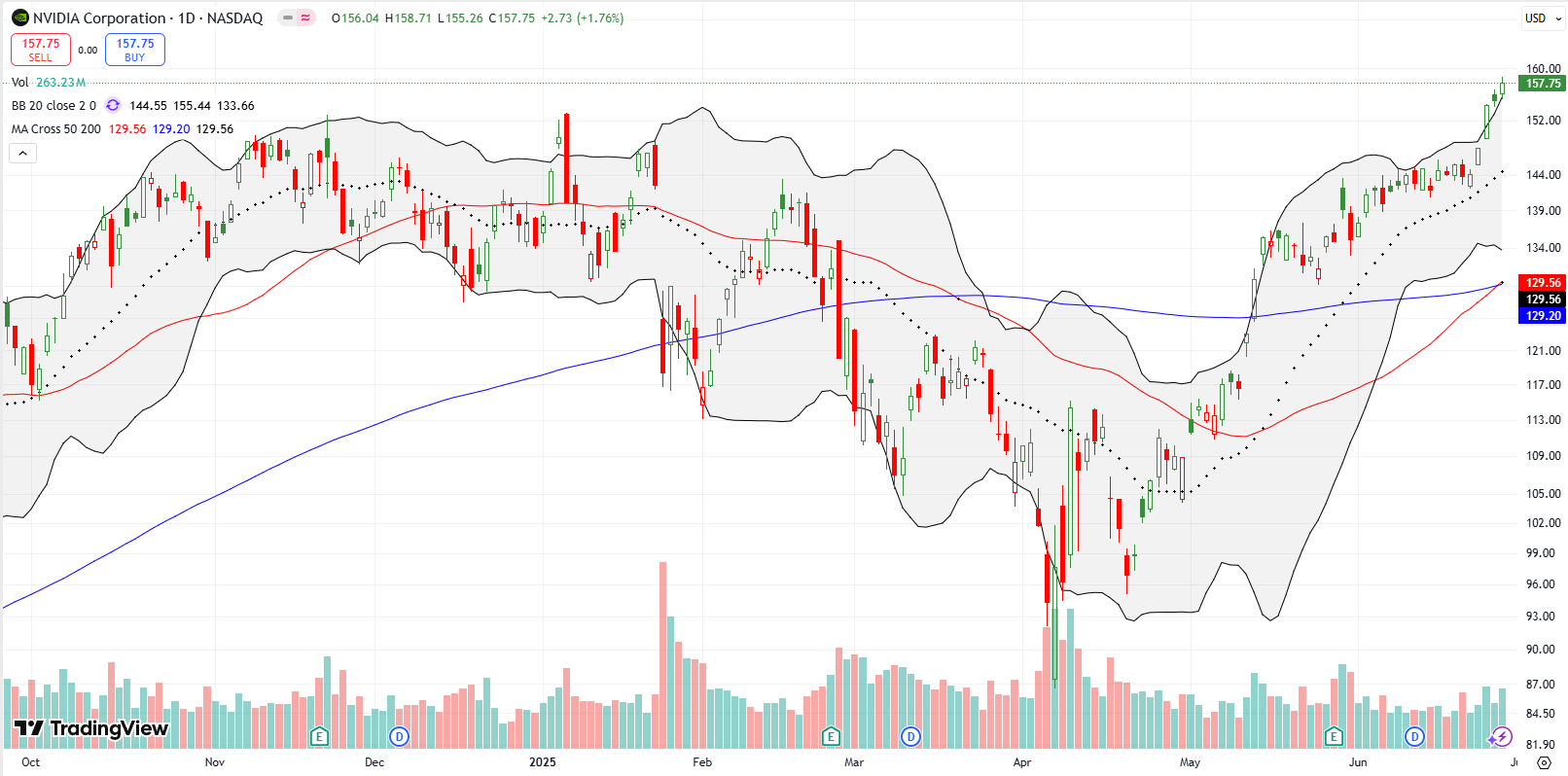
NVDA led the way to all-time highs. Two days before the major indices followed suit, the stock cleared double bearish engulfing tops on the way to an all-time high. The breakout makes a run to $200 seem plausible. I started my return to long trades in NVDA with a calendar call spread that hit my price target the very next day. Such positions are the only way to chase such BB run-ups. Otherwise, I strongly prefer to enter on the next test of 20DMA support.
Palantir Technologies Inc (PLTR)
I am sure PLTR raised eyebrows. This market darling fell abruptly and sharply from its all-time high in a surprising display of market under-performance during a week of confident calm. PLTR plunged 9.4% on no news and high selling volume. I got caught holding a calendar call spread that is on the edge of a bust. I might try opening a new position on a test of converged support from the uptrending 50DMA and the former all-time high (the purple horizontal line below).
Lemonade, Inc (LMND)
Fintech and lending platform LMND remains choppy after retreating from recent highs. I am watching support at the 20DMA for a potential buy to play continued upward momentum to the high from November.
Oracle Corporation (ORCL)
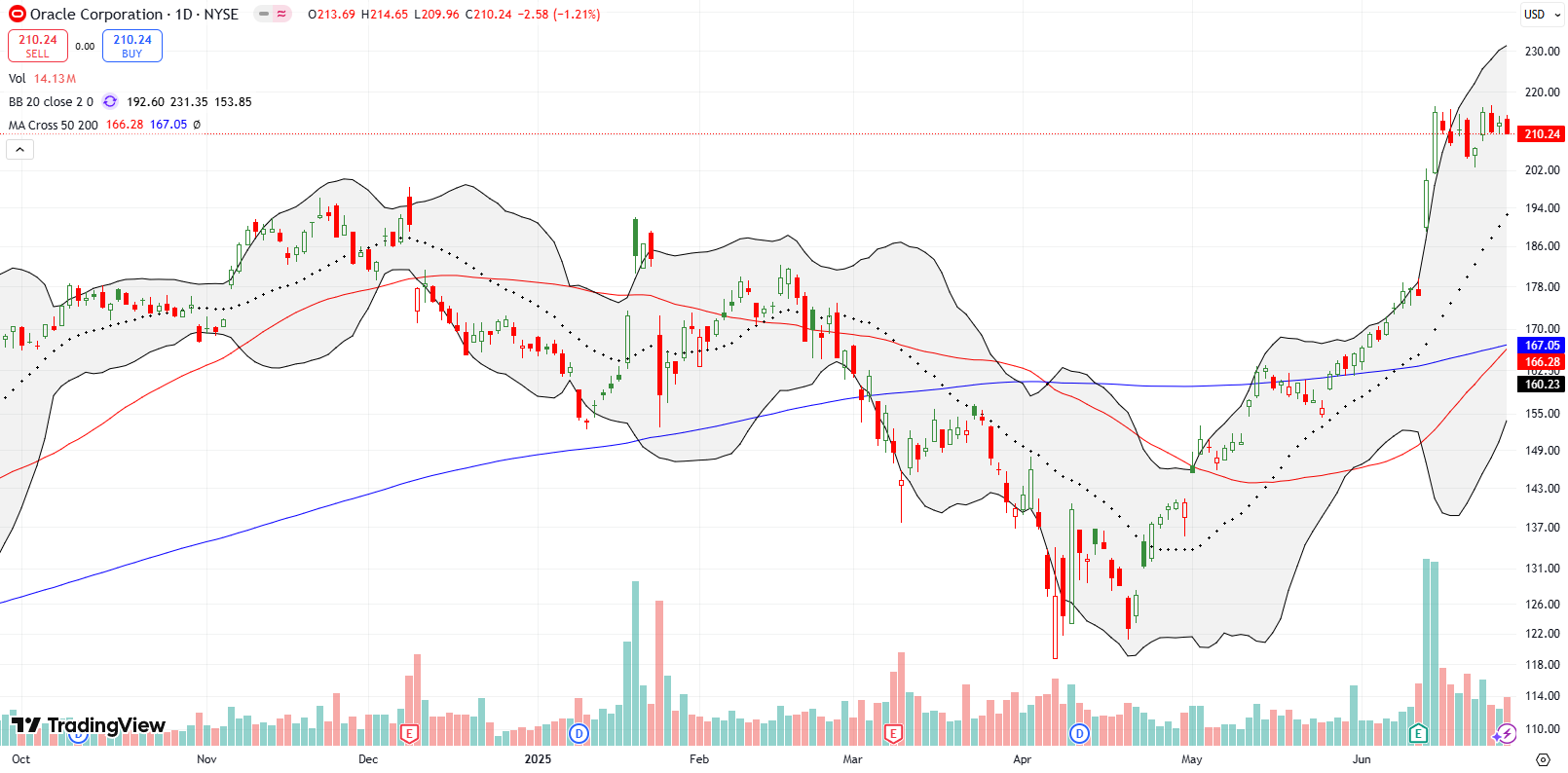
Oracle surged 13.3% post-earnings, followed by another 7%, but has since pulled back after extending well above its upper BB. I will buy a breakout above this area of price consolidation, but I prefer a lower risk entry on a test of 20DMA support.
Duolingo, Inc (DUOL)
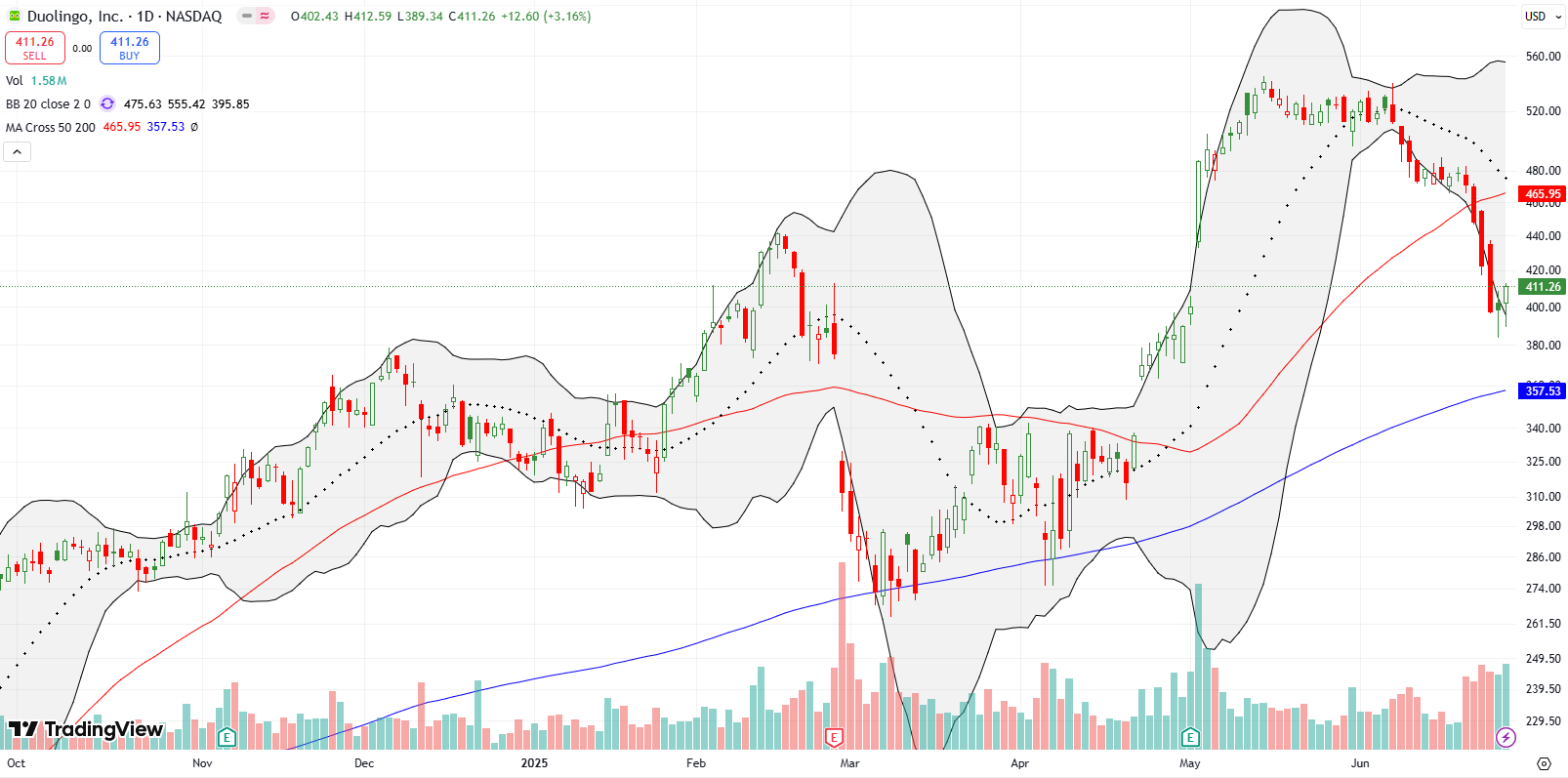
Duolingo, Inc (DUOL) is a (former?) market darling that has under-performed for a month. DUOL trades between its 50‑ and 200DMAs after selling accelerated on a 50DMA breakdown. The 200DMA is a critical level for confirming the next bullish setup. I see no news to explain DUOL’s steep descent; on May 21st Citron reiterated its bearish thesis on the stock.
DUOL is now 24% below its all-time high. Buyers finally stepped up the last two trading days.
ARK Innovation ETF (ARKK)
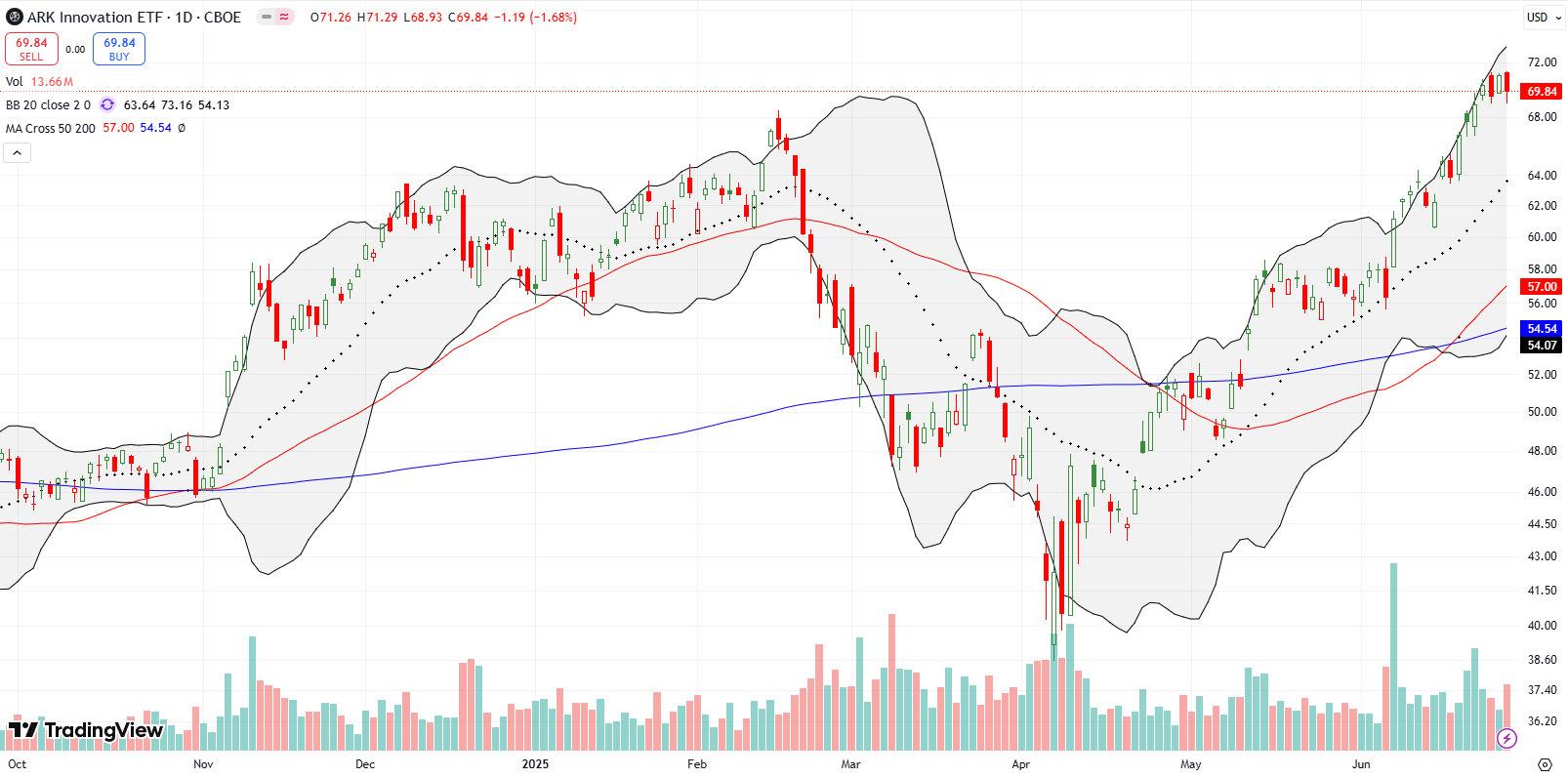
In December, ARKK broke above its pre-pandemic high at $60.38 but failed to hold the breakout. However, per the video below, I locked into the breakout as a signal that ARKK was finally making the turn, a bearish to bullish reversal. I finally put down my harsh critiques of this under-performing ETF and started to think about what could go right.
After ARKK plunged with the rest of the market into March and April’s tariff drama, trauma, and noise, I continued to add shares and made the ETF one of my top picks to buy during the related oversold period. Along the way, I noted how Tesla (TSLA) was dragging on ARKK’s performance.
During the current rally, I dutifully locked in some profits, including some shares that were called away as part of a covered call trade, but I continue to hold a core ARKK position. The ETF is largely freed from the anchor of TSLA by some timely buys, especially Circle Internet Group, Inc (CRCL). However, darlings like CRCL and now PLTR hit major speedbumps last week. So a fresh buy-the-dip opportunity may be around the corner as the current bearish divergence from market breadth plays out.
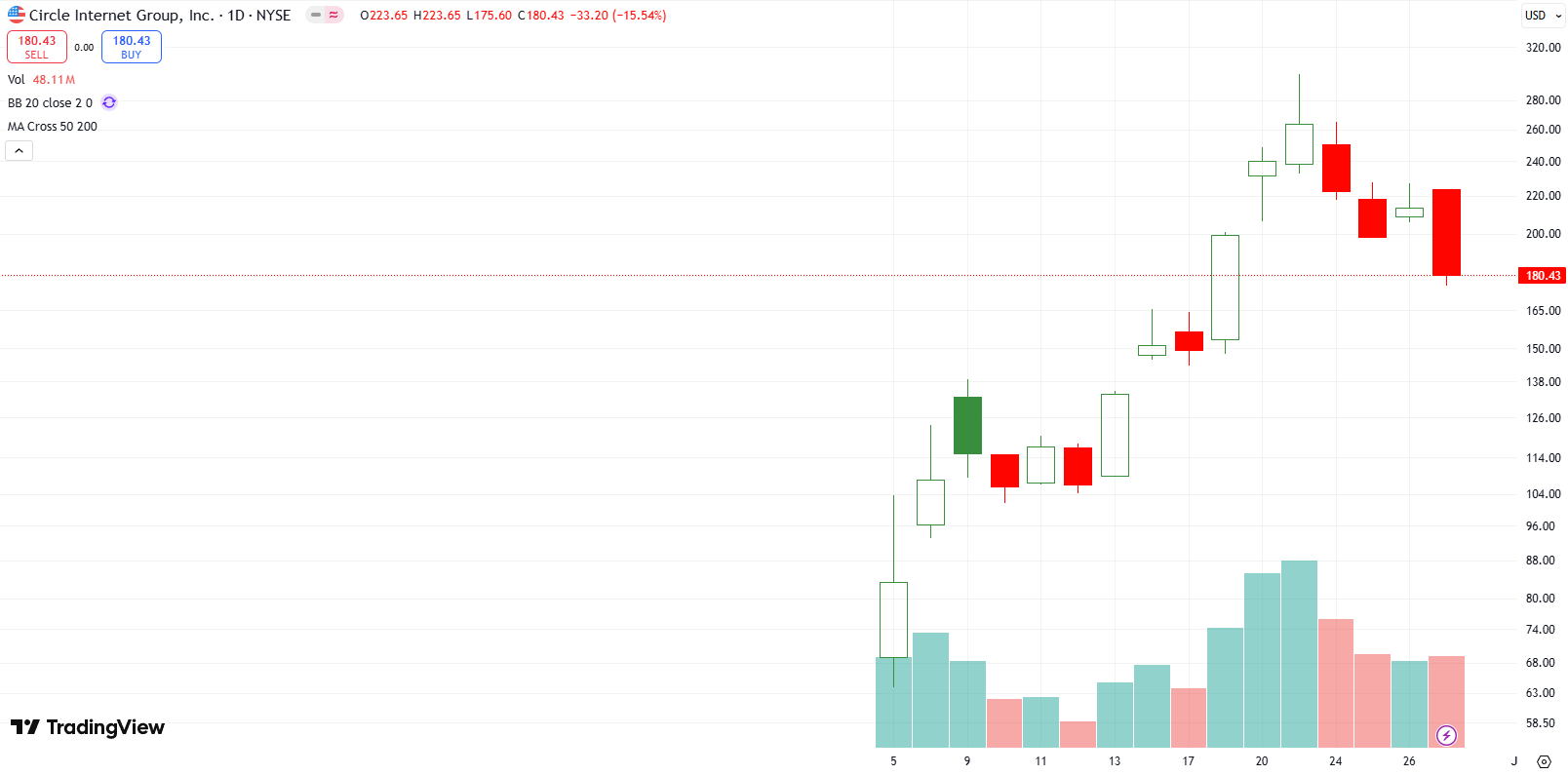
Circle Internet Group, Inc (CRCL)
Circle dropped ~35% this week off its all-time intraday high. The $150 level offers initial support, with $135 offering more substantial technical support. This sharp pullback is the exact scenario I contemplated in the last Market Breadth post. If I buy CRCL, I would wait for a convincing bounce off one of these support levels. Otherwise, I am happy to leave Cathy Wood and team to managing trades in this rocketship.
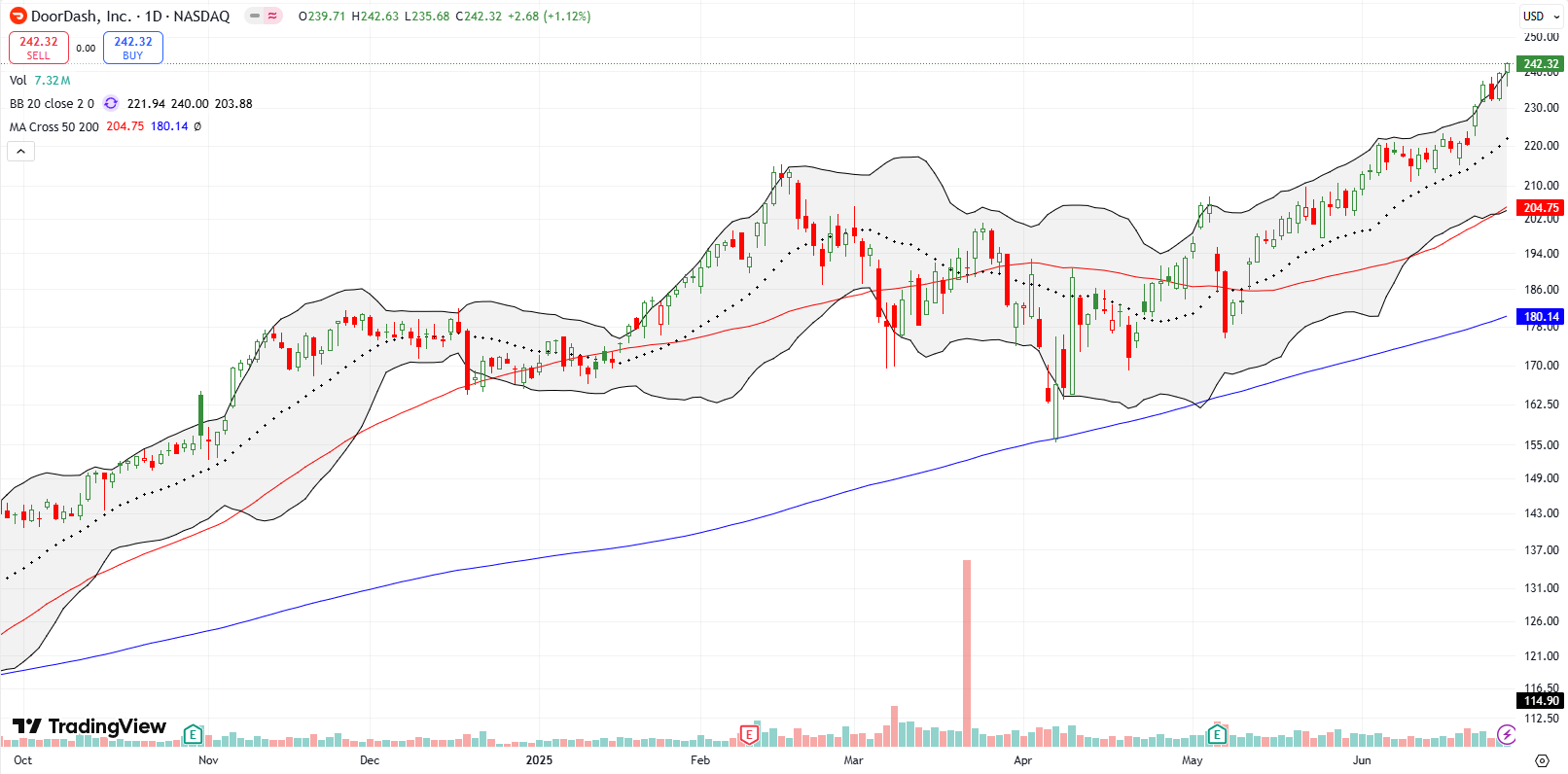
DoorDash is making a bid to keep up with the market as it tests all-time highs. The latest breakout confirms a resumption in an impressively bullish runup since the 2023 bottom. I bought a small amount of shares last week and decided to make it a long-term position. This designation means that I am targeting holding it through volatility down to 200DMA support. Note the picture-perfect 200DMA test at the intraday low in April.
Novo Nordisk (NVO)
Novo Nordisk dropped below its 50DMA but sellers failed to follow-through with a confirmation of the bearish breakdown. Buyers returned, and the stock is now testing 50DMA resistance. I decided to hold NVO down to around $63 as I think the bearish to bullish reversal is still intact given the recent vote of confidence from activist hedge fund Parvus.
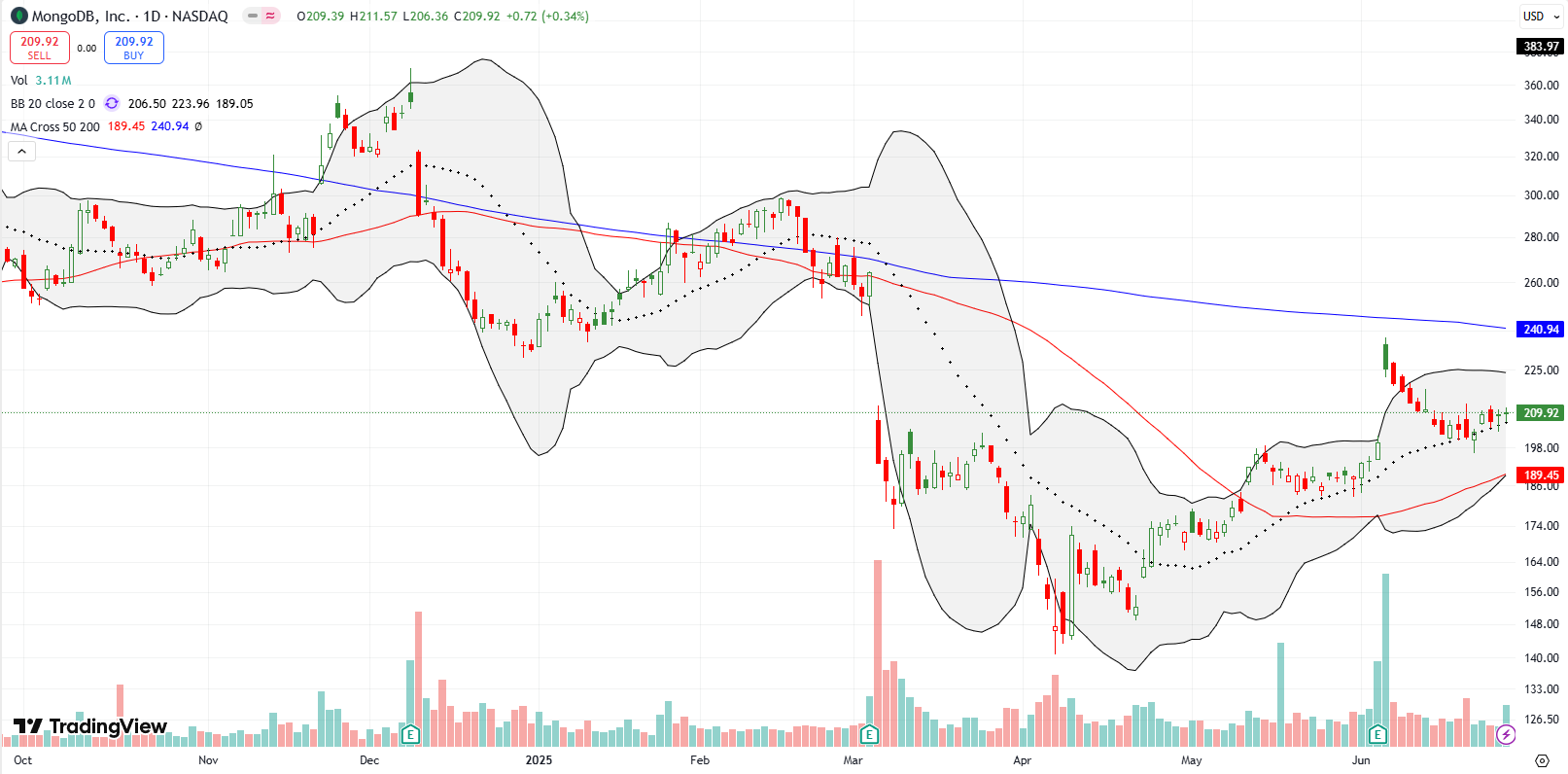
MongoDB, Inc (MDB)
NoSQL database company MDB gap-filled its ~13% post-earnings rally and now sits between its 20‑ and 200DMAs. A bullish reversal will depend on a break above the 200DMA. I am not buying off 20DMA support because NoSQL seems to be a dying technical fad, so I see no rush to speculate on the stock.
Equinix, Inc (EQIX)
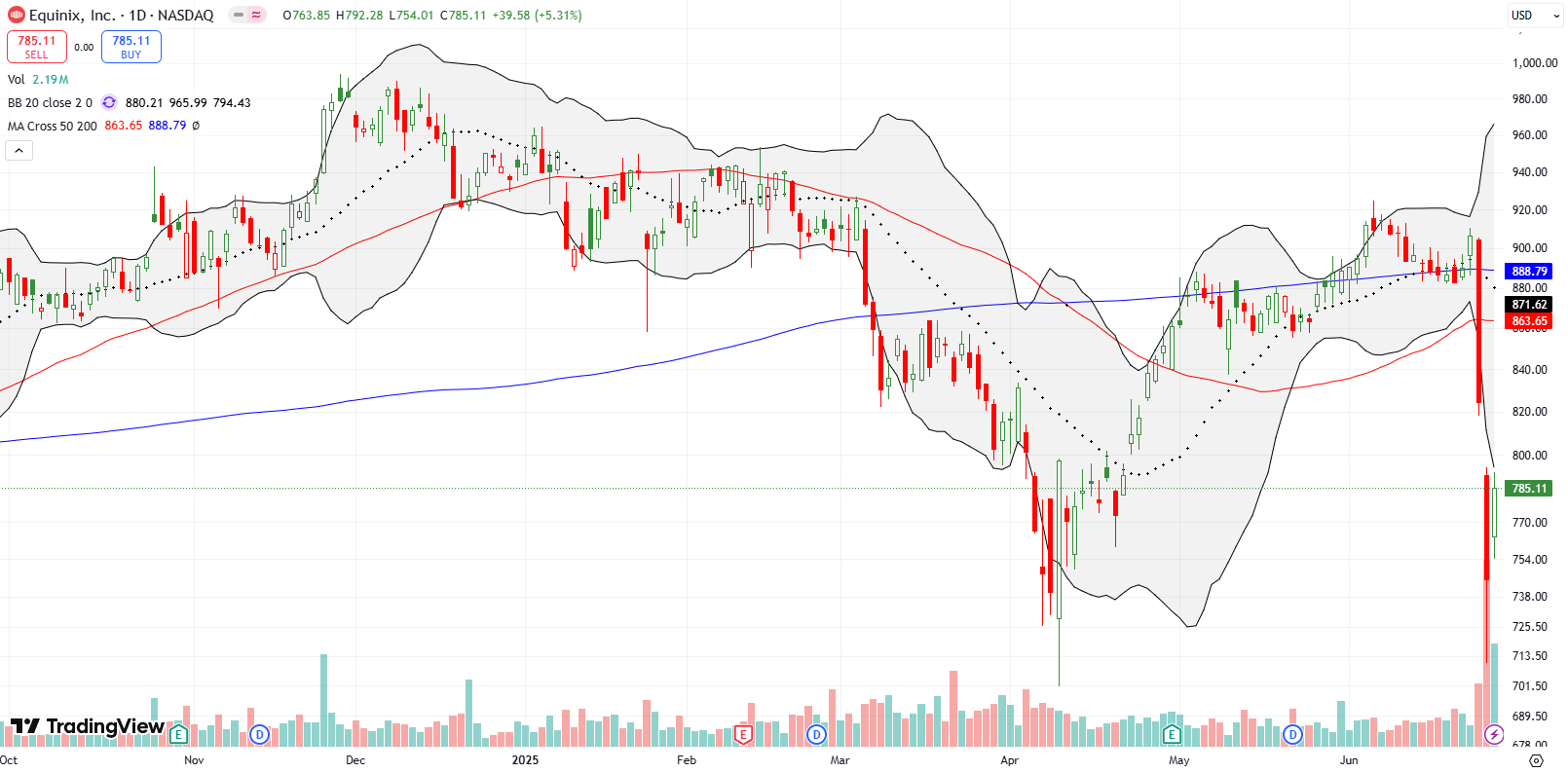
On Wednesday, I took note of data center REIT EQIX tumbling 9.1% during an analyst day. I did not have time to review the news from the event but figured I had time given the stock was extended below its lower BB. By the time I checked in again on Friday, EQIX was rebounding 5.3% from another 9.5% plunge. Given EQIX rebounded from a near test of the April lows, I think it is a high-risk short here. Instead, I will wait to see whether it can “dead cat bounce” its way to a gap fill for a better short entry. EQIX was downgraded by two analyst shops on Thursday on growth concerns coming out of the analyst day.
Mastercard Incorporated (MA)
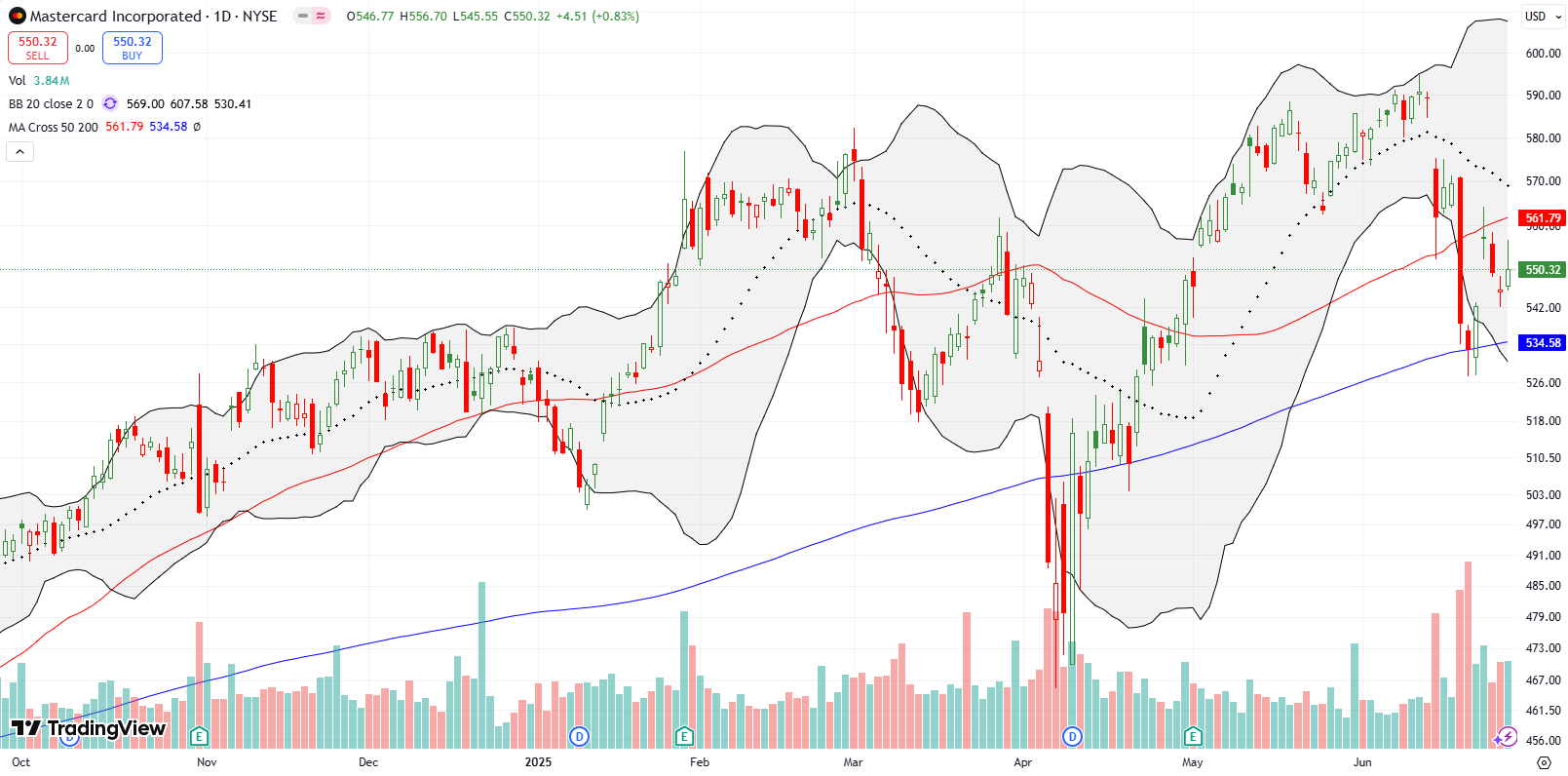
Mastercard experienced a 50DMA breakdown on stablecoin news but promptly rebounded from its 200DMA. Thus, the long-term bullish trend remains intact. While I missed buying off support, I bought a call spread on a pullaback from 50DMA resistance after MA announced a timely stablecoin partnership with Fiserve (FI).
Fiserve, Inc (FI)
Fiserv tested and failed at 50DMA resistance on the news of the Mastercard stablecoin partnership. The stock looks very broken, so it will take more than a 50DMA breakout to get me in. Until it breaks out above 200DMA resistance, I strongly prefer MA.
Snowflake (SNOW)
SNOW broke out of a Bollinger Band squeeze but remains below pandemic bubble-era prices. I am waiting for a pullback to the 20‑day MA before considering a buy.
Toast, Inc (TOST)
Restaurant paymet platform TOST was on the verge of a major breakout before it suddenly dropped 7.1% on no news that I found. I missed the perfect test of 50DMA support the next day. Buyers have almost reversed the earlier losses, so I am back on breakout watch.
Domo, Inc (DOMO)
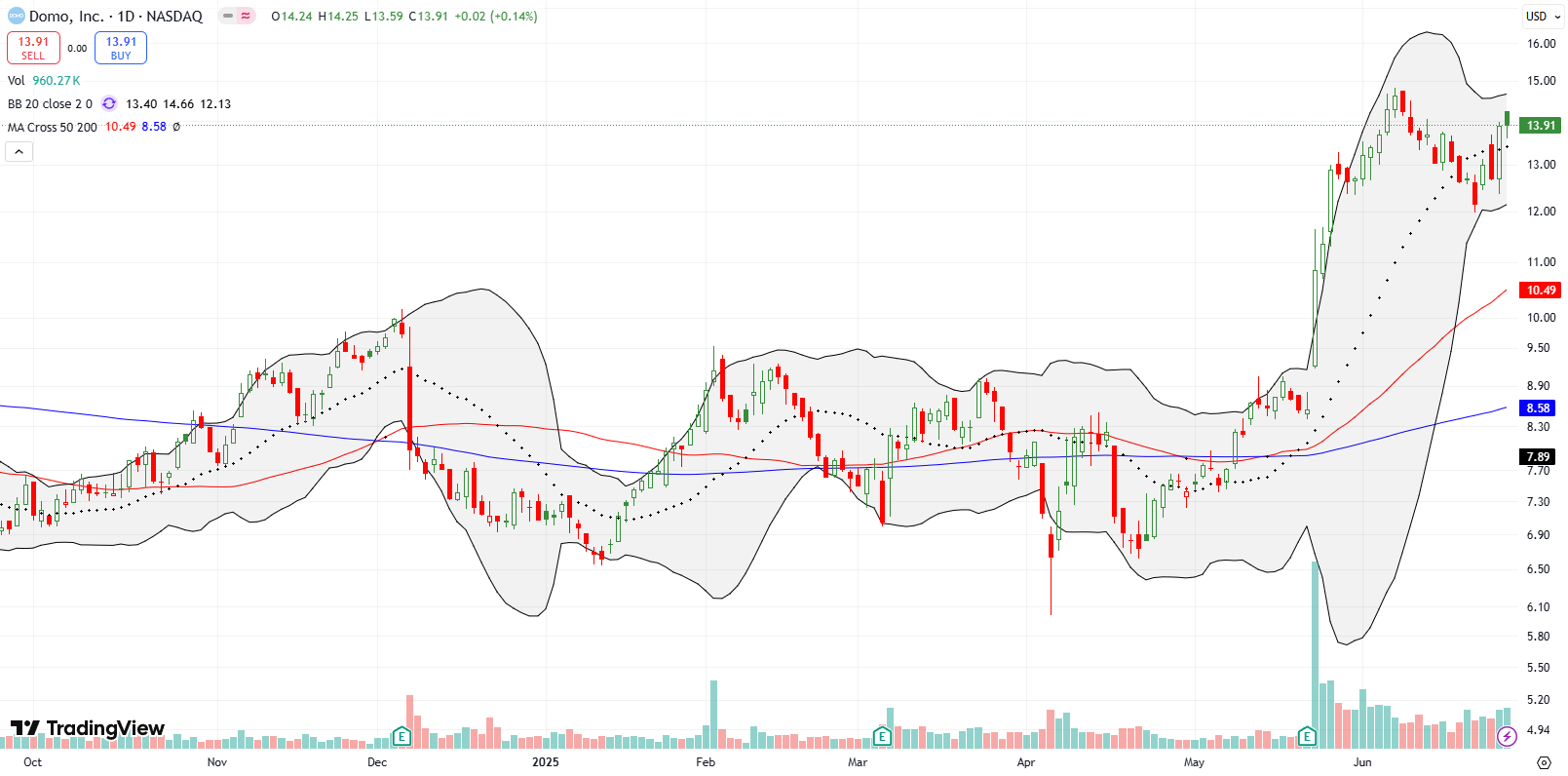
DOMO delivered a buyable pullback. After topping out on June 6, DOMO floated downward for two and a half weeks. During that time my low profit, low risk covered call position was called away. From there, I patiently waited for a good entry point. Tuesday’s 6.9% rebound flashed a potential confirmation of a bottom at the lower BB. I bought on Wednesday’s pullback, and, so far, so good…
As a reminder, I am back to using Domo’s analytics platform, and I am highly impressed with their progress over the last three years. The stock is undergoing what looks like a bearish to bullish reversal with May’s post-earnings breakout and subsequent 10-month high that is filling a massive 35.8% post-earnings gap down from August, 2023.
Spotify Technology (SPOT)
In March, I caught SPOT testing 50DMA resistance after a bullish abandoned baby bottom. Given the bearish vibes of the time, I went after the short instead of focusing on the bullish implications. I “escaped” the position after SPOT’s 50DMA breakout failed. However, I lost track of the next breakout and stalled after SPOT quickly recovered from a post-earnings loss at the end of April. Now I can only lament missing out on the latest buy the dip opportunities along an incredible uptrend. SPOT has climbed roughly 10× from its 2023 low. I am on alert for the next pullback to, hopefully, 50DMA support.
Best Buy (BBY)
BBY bounced from a 7.3% post‑earnings drop only to head back to those lows. BBY’s lagging is a yellow falg on the retail sector. I still hold a July $65/$60 put spread.
Intuitive Surgical (ISRG)
ISRG fell after a downgrade, but I held firm. So far, I’ve been rewarded with a successful retest of the intraday low from that breakdown and now a fresh 50 and 200DMA breakout.
McDonald’s Corporation (MCD)
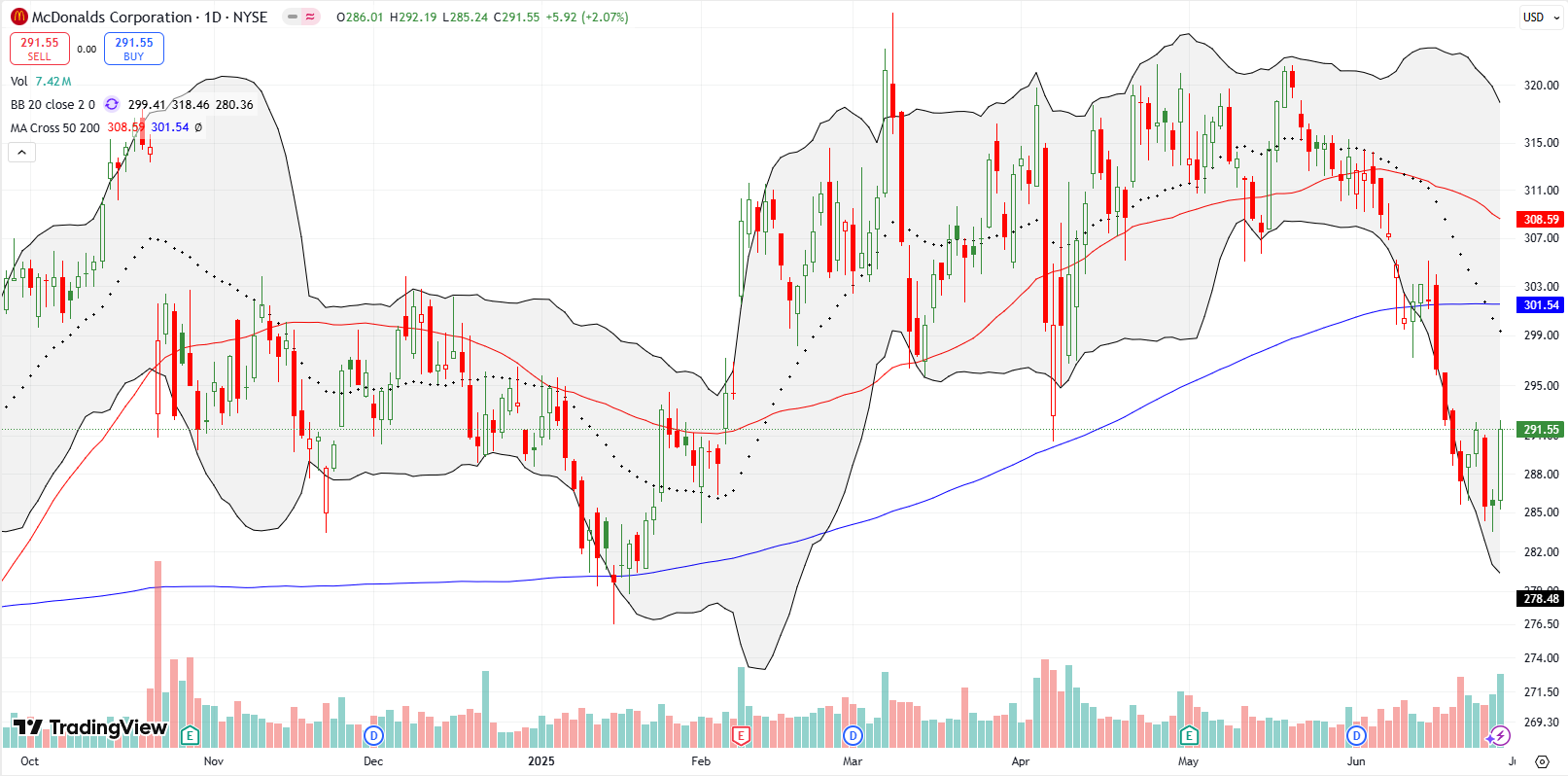
I was late to chasing the 50DMA breakdown for MCD. The stock bounced two days after I bought the put before falling to a fresh 5-month low on Wednesday. Friday’s surge and reversal makes me think that MCD has bottomed. I will look to salvage whatever value is left in my put option.
U.S. Dollar Index (DXY)
The collapse in trade negotiations between Canada and the U.S. brought the U.S. dollar index (DXY) back into focus. After an initial surge, USD/CAD faded from its 50DMA resistance. The dollar index closed the week at a fresh 40-month low. So far, the stock market has not cared about the dollar’s constant losses. At some point, I expect it to care as this selling in the dollar reflects waning confidence in the U.S. and growing concerns about a budget bill that will balloon the deficit further.
Be careful out there!
Footnotes
Subscribe for free to get email notifications of future posts!
“Above the 50” (AT50) uses the percentage of stocks trading above their respective 50-day moving averages (DMAs) to measure breadth in the stock market. Breadth defines the distribution of participation in a rally or sell-off. As a result, AT50 identifies extremes in market sentiment that are likely to reverse. Above the 50 is my alternative name for “MMFI” which is a symbol TradingView.com and other chart vendors use for this breadth indicator. Learn more about AT50 on my Market Breadth Resource Page. AT200, or MMTH, measures the percentage of stocks trading above their respective 200DMAs.
Active AT50 (MMFI) periods: Day #38 over 20%, Day #36 over 30%, Day #31 over 40%, Day #26 over 50%, Day #24 over 60%, Day #3 under 70%
Source for charts unless otherwise noted: TradingView.com
Full disclosure: long IWM shares, long GLD call spread, long ARKK, long DASH, long NVO, long ISRG, long MA call spread, long DOMO, long BBY put spread, long MCD put
FOLLOW Dr. Duru’s commentary on financial markets via StockTwits, BlueSky, and even Instagram!
*Charting notes: Stock prices are not adjusted for dividends. Candlestick charts use hollow bodies: open candles indicate a close higher than the open, filled candles indicate an open higher than the close.
* Blog notes: this blog was written based on the heavily edited transcript of the following video that includes a live review of the stock charts featured in this post. I used ChatGPT to process the transcript.
has been a while you commented on JMIA. Heard a takeover news today. Is it a good idea to still hold especially knowing that next wave of growth can be in africa
Hi Pradeep – I have been writing about JMIA on SeekingAlpha. I should have been reminding readers. Here is my latest: https://seekingalpha.com/article/4786579?gt=edc8111701f10017
The really big development last week was that an institutional investor stepped in and bought a large amount of shares (SEC filing). The momentum in the stock since then has been telling. And now this takeover rumor. I actually hope the rumor is false. JMIA would be selling far under their longer term value. But let’s see what happens tomorrow. Usually, some kind of resolution happens quickly whether denial or an announcement. I am still a large holder.
Thanks for the info. Looks like I am long into it as well and really hoping for it to excel as Amazon of Africa’s and not become part of some other holding company . Wishing a good luck to both of us who are long holders
Yes. Good luck to all of us long-suffering but dedicated JMIA holders!