
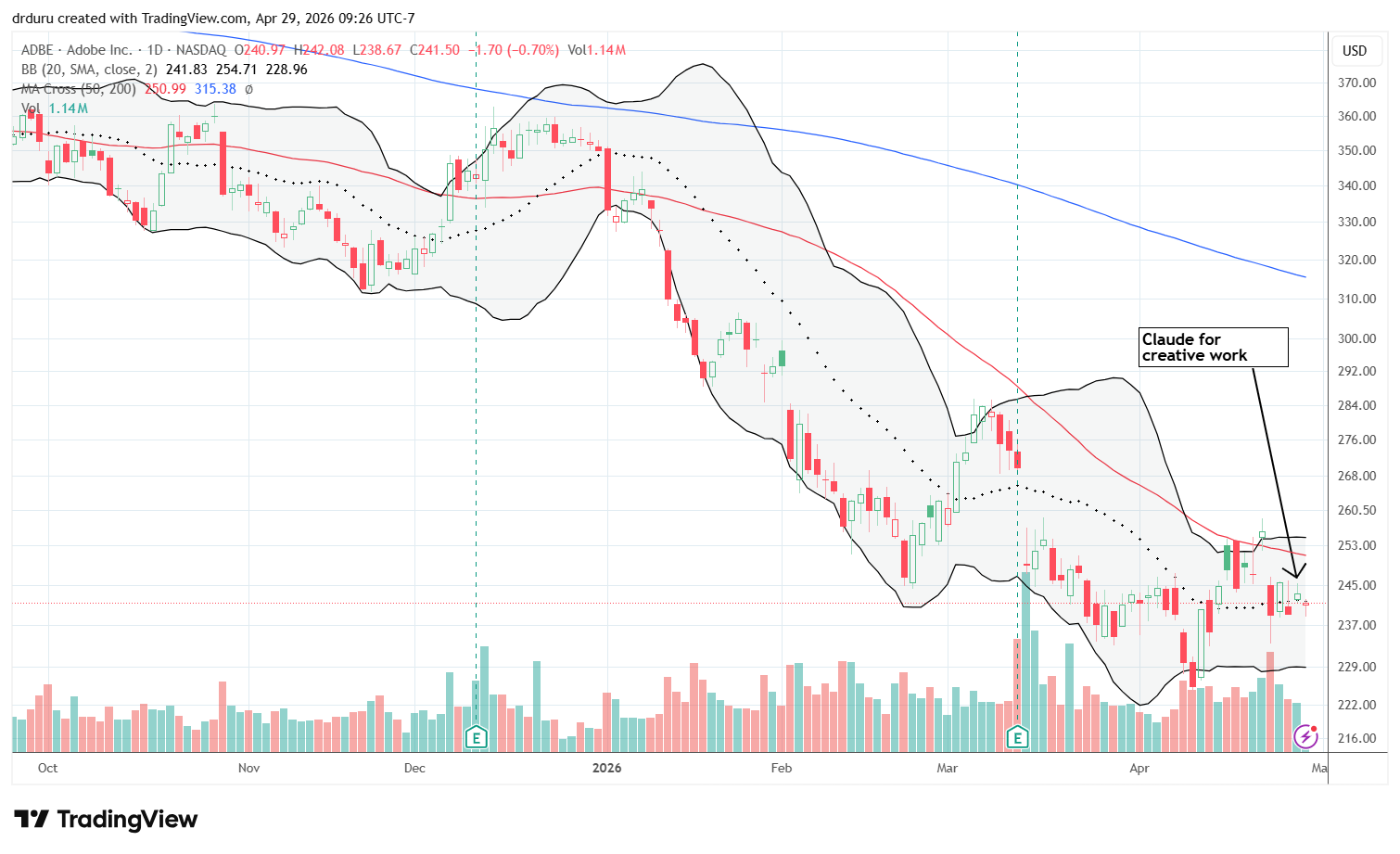
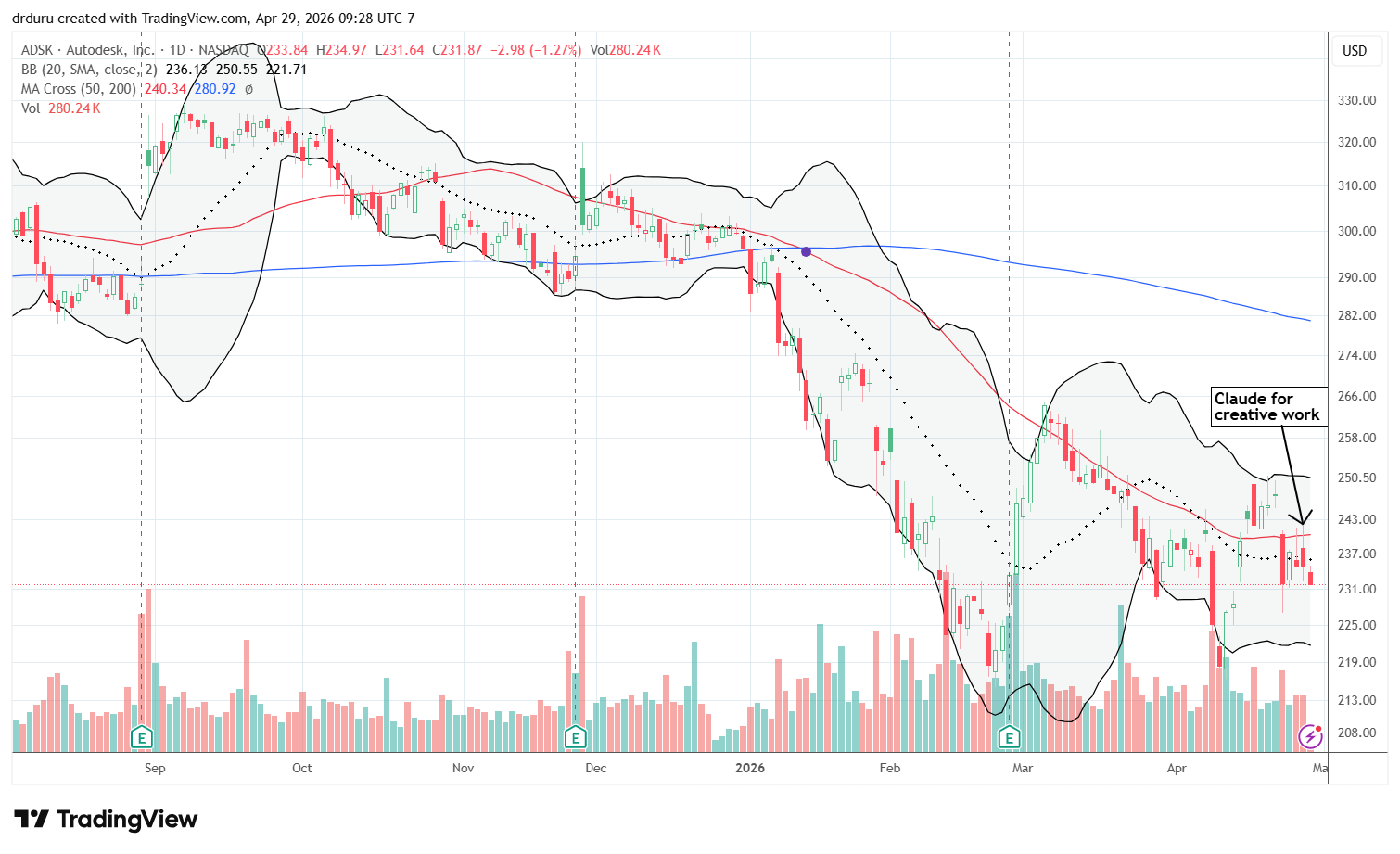
Anthropic seems to have a policy of producing a steady onslaught of significant product releases. On April 28th, the AI platform and software company released a set of connectors for integrating Claude, Anthropic’s coding and agentic platform, with software tools for creatives. In “Claude for Creative Work” Anthropic explains how these connectors expand the possibilities for creative professionals while conceding Claude “can’t replace taste or imagination.” In recent weeks and months such an announcement caused a fresh bout of AI Panic amplifying the selling in software stocks associated with the SaaSpocalypse. However, Adobe (ADBE) and Autodesk (ADSK), the two publicly traded software companies referenced in the press release, barely budged in response. Thus, I interpreted this market moment as an opportune time for another test of the capabilities of PAIROS, my analytic framework for understanding the impact of AI on software.
The press release reads like a relatively benign expansion of capabilities for users of software tools for creatives. So, I wanted to see whether PAIROS could detect any potential problems. I pushed PAIROS to be an even more critical analyst with this prompt: “Anthropic has positioned itself as a technology partner, not a substitute. Does the story really end there based on this announcement? Consider what paths Claude is opening to replace any of these tools.” The resulting analysis tells an encouraging but cautionary story.
PAIROS delivered a slightly positive conclusion about the impact of Claude for creative work with an important caveat:
“The announcement…describes Claude writing scripts, plugins, shaders, procedural animation, parametric models, format translations, asset syncs, batch-processing workflows, project scaffolding, and procedural scene changes….[These] are paths toward partial replacement of tool expertise, workflow glue, repetitive production software, and eventually some portions of the application layer itself.”
The following text comes from an edited version of the output of my PAIROS model.
Good potential, but with visible value-migration risk
Target scored: creative software tools as a category, represented by Adobe, Autodesk/Fusion, Blender, Ableton, SketchUp, Splice, Resolume, and Affinity/Canva.
This is a score for the software category Claude is impacting through connectors. (See the Appendix for a detailed breakdown of the scoring).
| Index | Score | Interpretation |
|---|---|---|
| Viability Index (VI) | 3.35 | Positive but mixed |
| Structural Condition Index (SCI) | 3.28 | Positive but mixed |
| Economic Value Index (EVI) | 3.20 | Positive but mixed |
| Final qualitative description | Good potential, but with visible value-migration risk | All indices are above 3.0, but none reaches the strong 3.8 threshold |
VI conclusion: Claude needs these tools for creatives today, especially where a tool owns rendering, editing, modeling, documentation, catalogs, APIs, and file outputs. However, the score is capped because Claude is abstracting away user expertise and manual execution.
SCI conclusion: Structurally, the strongest tools are the ones that own durable project state, domain-specific engines, file formats, rendering systems, asset catalogs, marketplace ecosystems, or production pipelines. The weakest tools are those that mainly provide a human UI over tasks Claude can script, automate, or reproduce.
EVI conclusion: EVI is the lowest of the three indices. Claude’s connectors can increase usage, but usage is not the same as value capture. The economic question is whether the creative software vendor captures the AI-expanded workflow or whether Claude becomes the layer that owns the intent, orchestration, and user relationship. The jury is out on this dynamic.
The result summary: creative software remains necessary in the near term, but Claude is moving value away from manual interface mastery and toward natural-language orchestration, code generation, pipeline automation, and model-driven creation.
The software risks: Where Claude is opening replacement paths
While Adobe, Autodesk, and other connector partners are “safe” for now, there are risks for software companies that overly focus on the features Claude is replacing.
1. Replacing tool mastery
The announcement says Claude can teach users how to use complex software, explain unfamiliar features, and show users how to execute tasks. That helps adoption, but it also reduces the value of deep UI fluency. The more users can describe intent in natural language, the less the app’s interface complexity protects the incumbent.
At risk: training content, certification value, UI-based lock-in, basic professional-service support, and beginner/intermediate workflow expertise.
2. Replacing repetitive production features
Anthropic describes affinity by Canva as automating batch image adjustments, layer renaming, file export, and custom features directly in the app. Claude also handles multistep tasks like batch-processing assets and setting up project scaffolding.
At risk: narrow utility plugins, batch-processing tools, workflow macros, template-based production software, and some low-end creative operations tools.
3. Replacing workflow glue between tools
Claude can translate formats, restructure data, keep assets in sync, and move work between design, 3D, and audio tools without manual handoffs. These capabilities move Claude closer toward the orchestration layer between creative tools.
At risk: file-conversion utilities, integration middleware, handoff tools, asset-prep workflows, and manual pipeline management.
4. Replacing some plugin ecosystems
Claude Code can write scripts, plugins, shaders, procedural animation, and parametric models. Blender is especially important because Claude can use Blender’s Python API and add tools directly to Blender’s interface.
At risk: small paid plugins, scripting services, custom automation shops, marketplace extensions, and repetitive feature requests that used to require third-party software.
5. Replacing starting-point creation
Claude Design can visualize software-experience options and export results to other tools, starting with Canva. SketchUp can turn a conversation into a starting point for 3D modeling.
At risk: blank-canvas creation tools, simple wireframing, first-draft mockups, rough 3D concepts, ideation boards, and lightweight concept-generation software.
6. Replacing search and discovery interfaces
Splice gives music producers sample search from within Claude. Ableton grounds Claude in official documentation. These are useful partnerships, but they also make Claude the front door for discovery.
At risk: native search interfaces, documentation portals, tutorial libraries, asset browsing flows, and some marketplace discovery experiences.
Summary
Anthropic’s “technology partner, not substitute” positioning is true at the connector layer but incomplete at the value-capture layer. Claude is not replacing Adobe, Autodesk, Blender, Ableton, SketchUp, Splice, Resolume, or Affinity/Canva wholesale, but it is learning to sit above them.
Thus, the PAIROS assessment is positive but mixed. The tools remain viable because Claude still needs their APIs, engines, file formats, catalogs, and production environments. However, Claude is opening replacement paths around tool mastery, repetitive production, workflow glue, plugin creation, search, discovery, and first-draft generation.
The strongest creative software companies will make themselves indispensable to Claude-driven workflows while still capturing the economics of that usage. The weakest software companies will rely on a role as a human interface for tasks Claude can automate, script, or route around.
Overall, the non-reaction for ADBE and ADSK makes sense. Yet, neither stock is a compelling buy either. Both stocks are in the middle of weeks-long price consolidation phases not far from critical lows. I am watching and waiting for some kind of catalyst that produces an upside breakout in price.
Be careful out there!
Appendix: Detailed scoring table
Viability Index
| Dimension | Score | Confidence | Directional read |
|---|---|---|---|
| Agent Substitution Boundary | 3.8 | High | Claude currently routes through partner tools, which supports the tool-persistence thesis. |
| Capability Frontier Sensitivity | 2.8 | Medium | As Claude improves, more creative execution can move outside the native app UI. |
| Recursive Improvement Exposure | 2.7 | Medium | Creative workflow automation is exposed to rapid model improvement. |
| Barrier to Software Replication | 3.2 | Medium | Deep engines, file formats, and ecosystems help, but many workflows become scriptable. |
| Tool Dependence of AI Systems | 3.6 | High | The announcement explicitly depends on connectors into tools. |
| AI Supply Chain Resilience | 3.7 | High | Claude is being embedded into existing creative pipelines rather than forcing full migration. |
| Model Dependency Structure | 3.8 | Medium | Blender’s MCP connector is accessible to other LLMs, which reduces single-model dependency. |
| Demand Expansion Under AI | 3.8 | Medium | Anthropic explicitly claims larger-scale projects, broader skillsets, and faster ideation. |
Structural Condition Index
| Dimension | Score | Confidence | Directional read |
|---|---|---|---|
| System Layer Position | 3.3 | Medium | Creative tools hold project assets and workflows, but many are not true enterprise systems of record. |
| Data Control & Context | 3.2 | Medium | The tools own meaningful project files, scenes, catalogs, and creative context. |
| Workflow Embedding Depth | 3.4 | Medium | Pro tools are embedded in workflows, but Claude is now becoming cross-tool workflow glue. |
| Persistence Layer Role | 3.6 | Medium | Creative files, projects, scenes, samples, and outputs persist inside or around the tools. |
| Information Processing Ownership | 2.7 | Medium | A lot of value is analysis, transformation, generation, and presentation, which Claude can absorb. |
| Human Interface Dependency | 3.3 | Medium | APIs and connectors improve agent access, but much of the category still depends on human-facing UIs. |
| Agent Enablement Function | 3.8 | High | The announcement is direct evidence that these products can become agent-enabled environments. |
| Domain Complexity Requirement | 3.7 | Medium | 3D, audio, video, CAD, and visual production still require specialized domain logic. |
| Tool Dependence of AI Systems | 3.6 | High | Claude still needs partner tool capabilities for many production-grade outputs. |
| AI Supply Chain Resilience | 3.7 | High | The connectors reduce the need to rebuild every creative workflow outside the tool. |
| Security Trust Premium | 3.0 | Low | The announcement does not provide enough evidence to score trust/compliance advantage. |
| Patch Velocity Readiness | 3.0 | Low | The announcement does not provide enough evidence to score operational remediation strength. |
Economic Value Index
| Dimension | Score | Confidence | Directional read |
|---|---|---|---|
| Monetization Position | 2.6 | Medium | Claude may capture more of the user relationship and workflow value unless partners monetize usage directly. |
| Value Capture Layer | 2.8 | Medium | Much of the value shifts toward orchestration and generation, not necessarily the incumbent app. |
| Commercial Defensibility Under Software Abundance | 3.2 | Medium | Incumbents retain ecosystems, but AI lowers switching and task-production costs. |
| Demand Expansion Under AI | 3.8 | Medium | More users may attempt advanced creative work because Claude lowers the skill barrier. |
| Barrier to Software Replication | 3.2 | Medium | Full engines are hard to replicate; task-level features are easier to recreate. |
| Human-AI Complementarity Potential | 4.0 | High | The announcement is strong evidence of human-AI collaboration rather than pure replacement. |
| System Layer Position | 3.3 | Medium | Persistent creative projects help the tools retain relevance. |
| Data Control & Context | 3.2 | Medium | Project context gives tools some value capture, but Claude can bridge across tools. |
| Capability Frontier Sensitivity | 2.8 | Medium | The better Claude gets, the more pressure lands on UI, training, production-task, and workflow-glue revenue. |
| Tool Dependence of AI Systems | 3.6 | High | For now, Claude’s value depends on tool access. |
Seen vs. unseen
Seen: Claude is explicitly being positioned as a partner that connects into trusted creative tools. That supports the Huang-style “agents use tools” thesis. Blender is the cleanest example because the connector uses the Python API and MCP, and Anthropic joined the Blender Development Fund.
Unseen: Claude may become the intent layer above creative software. If the user starts in Claude, describes the desired output, lets Claude select tools, writes the scripts, moves files, manages handoffs, and exports results, then the creative software remains useful but loses some control over the workflow and customer relationship.