

Thoma Bravo’s Buying Framework Amid the AI Panic
The AI-driven fear in software stocks is palpable with daily headlines and relentless product releases from the AI disruptors. The buying opportunities are broadening so fast that I have to create and maintain a structured framework for separating the survivors from the laggards. As a part of this effort, I looked up what Thoma Bravo has to say about the current destruction. Thoma Bravo is the largest private equity acquirer of software companies. The PE firm’s portfolio has likely taken a severe beating, and all hands are likely on deck to make sure portfolio companies are building for the AI future. Thoma Bravo talked with the Financial Times in Davos on January 20th and posted a copy of the related article on their website. Unsurprisingly, Thoma Bravo, like me, calls this moment a “huge buying opportunity”.
Thoma Bravo claims that specialized software companies with deep expertise in a particular domain will survive the AI disruption. AI will be unable to replicate applications where just a few companies and individuals across those companies holding the necessary skills and knowledge. Thoma Bravo calls this “the franchise” and “the value”. Specifically, “companies trying to replace these software tools with their own internal AI capabilities might uncover some savings but struggle to maintain their IT departments, making it unappealing to replace legacy software systems”. Thoma Bravo offered payroll and planning functions as examples. These examples are natural given that the PE firm recently acquired HR (human resources) software provider Dayforce for $12.3B.
Companies lacking the specialization and deep expertise are at risk. Aaron Levie, CEO of Box, made a parallel point by identifying platform strength as key to winning with AI. Thoma Bravo will also avoid software companies with exceptionally high stock-based compensation. The firm is not interested in using cash to pay for these stock grants in an acquisition.
As a point of context, FT pointed out that Thoma Bravo sees opportunity in any environment including the last major peak in tech stocks in 2021. At that time, co-founder Orlando Bravo boldly proclaimed “good luck in sitting on cash and waiting for the market to get cheap”. The about page emphasizes this perspective in the following quote: “we believe the best time to do a good deal is when you can, based on company fundamentals, not market cycles”.
Market Psychology: From Skepticism to SaaSpocalypse
My favorite headline so far during this panic comes from Bloomberg (through Yahoo Finance): “‘Get me out’: Traders dump software stocks as AI fears erupt“. The article is oozing with the frenzy of a panic, for example, “Wall Street has been skeptical about software stocks for a while, but sentiment has gone from bearish to doomsday lately with traders dumping shares of companies across the industry”. This SaaSpocalypse, a term referenced by Jeffrey Favuzza from Jefferies, took down legal software companies as its latest direct victims.
Anthropic released a productivity tool for in-house lawyers. The ensuing stampede out of related stocks plunged LegalZoom (LZ) by 19.7%, a crash that flashed me back to 2023 when I used a ChatGPT scare to buy up LZ on the cheap and later profit. I am back in accumulation mode and doubled down on my latest core holding. While I am still waiting for LZ to announce significant progress in using AI-related technologies to drive the business, this company’s years of experience in providing digital legal services fits Thoma Bravo’s description of a specialized software company likely to survive (and hopefully soon thrive) in this AI-driven panic.
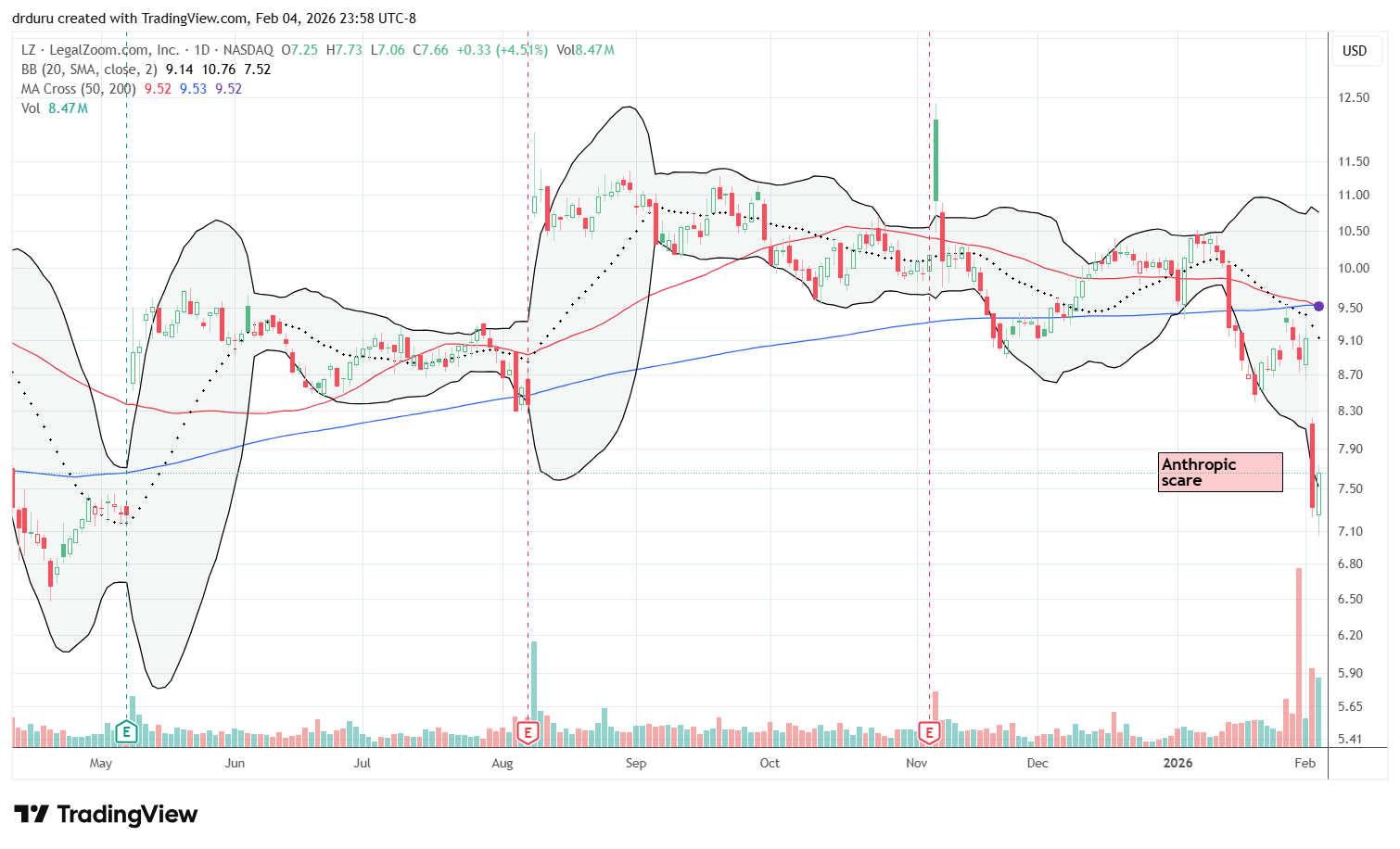
Anthropic Fallout
Bloomberg traced back the origins of the panic to last fall when Apollo Global Management’s John Zito “stunned an audience in Toronto” claiming that the death of software is the biggest risk to private capital markets. With this context, I better understand the persistence of the panic and why every new development sends software stocks lower.
Anthropic is showing how new coding products can be created. Bloomberg points out that net retention will come down along with upsell and growth rates. Accordingly, valuations will also come down. Gross margins have yet to tumble but are likely next. The consumption-based model of AI products will reduce the number of software seats to sell, but AI infrastructure can still do well.
Per Thoma Bravo, this value-destruction is most applicable to the non-specialized software companies. Without offering distinctions across software companies, Bloomberg still advised investors to “slow down” and adjust to the new valuation story. The current indiscriminate selling will bottom out at some point.
Case Study: Will monday.com Soon Become Unviable?
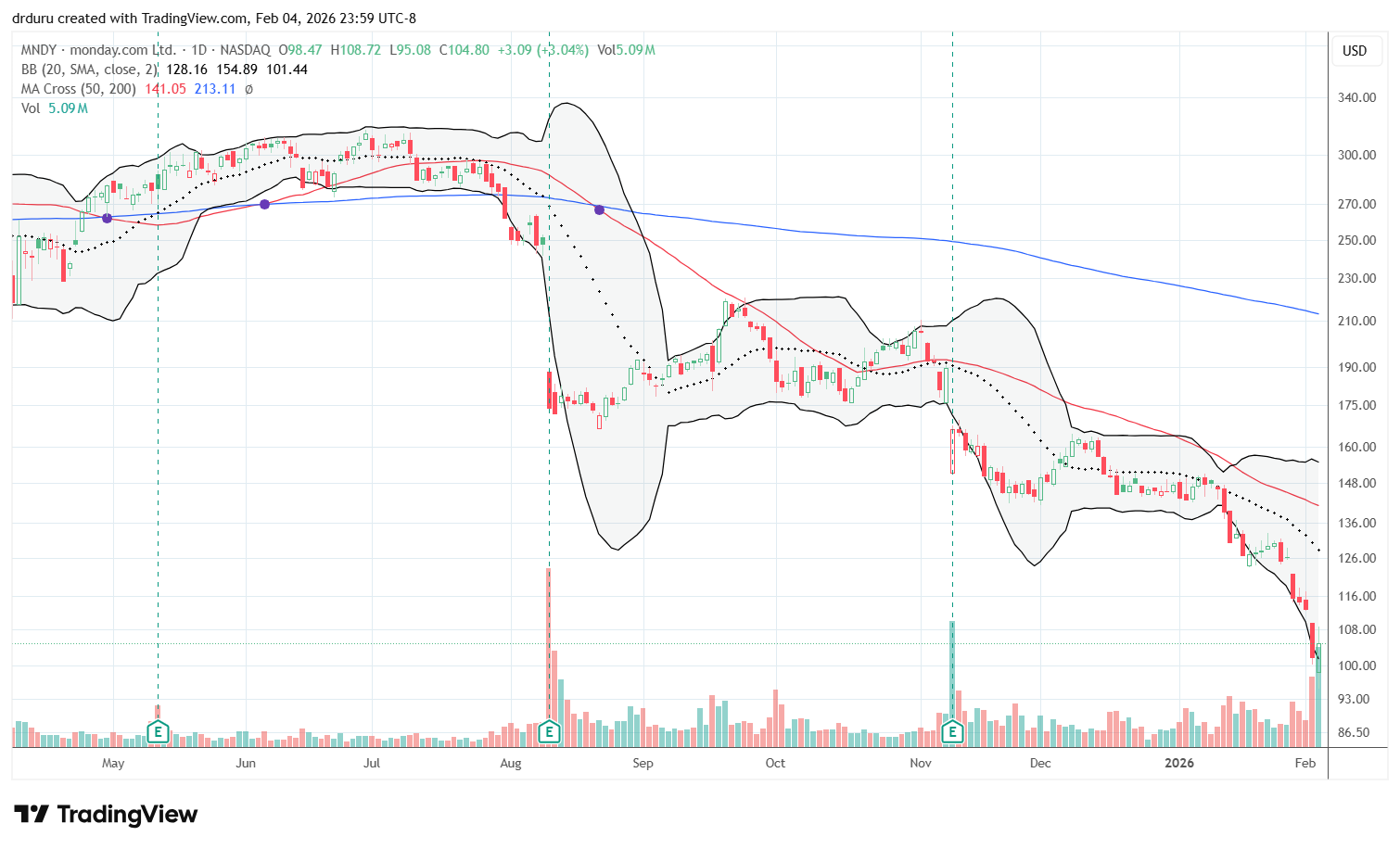
CNBC’s Deirdre Bosa demonstrated the potential value destruction coming from AI tools. She put Claude Code to the test to replicate the functionality of monday.com (MNDY), a provider of planning and project management software. Bosa claimed she was able to create a dashboard in 30 minutes and in another 30 minutes connected her app to gmail and her Google calendar. The finished app she showed through a pre-recording is apparently something she can use. Bosa went on to point out that Claude in the hands of a developer could generate something more powerful although she acknowledged it could not likely replace monday.com….today. She concluded that the most vulnerable software are the systems that sit on top of other applications, exactly the non-specialized vendors that Thoma Bravo referred to.
Conclusion
The current panic in software stocks reflects a structural repricing rather than a wholesale collapse of the industry. AI is compressing valuations, pressuring margins, and forcing investors to reassess growth assumptions, but it is not eliminating the need for software. As Thoma Bravo argues, companies with deep domain expertise, entrenched workflows, and defensible franchises will remain difficult to replace, even as AI lowers barriers to entry for simpler tools.
The market’s indiscriminate selling has obscured these distinctions, creating volatility-driven opportunities alongside genuine risks. Software businesses built atop other applications, lacking specialization, or reliant on excessive stock-based compensation face the greatest threat. In contrast, firms embedded in mission-critical processes may endure near-term disruption while positioning themselves for longer-term adaptation. The challenge for investors is not predicting AI’s next advance, but distinguishing durable software franchises from those most exposed to commoditization.
Be careful out there!
Full disclosure: long LZ